
TL;DR:
- Mindfulness at work involves brief, intentional awareness practices that reduce stress and improve focus. Research confirms modest yet meaningful psychological benefits, emphasizing easy exercises and clear organizational goals. Success depends on credible programs focusing on stress reduction and authentic, accessible implementation.
Most professionals assume mindfulness at work means clearing your mind, sitting in silence for 30 minutes, and emerging serene. That’s not how it works, and that misconception keeps a lot of people from ever trying. Research tells a different story. A meta-analysis of 17 RCTs found that mindfulness-based interventions produced a significant reduction in perceived stress among non-clinical adults. You do not need a quiet mind or an hour to spare. You need a few minutes and a realistic understanding of what mindfulness actually does.
Table of Contents
- Key Takeaways
- What mindfulness at work really means
- Mindfulness, focus, and workplace performance
- Practical mindfulness exercises for employees
- Creating a mindful workplace culture
- Common pitfalls and how to get past them
- My honest take on mindfulness at work
- How Seo-analytic can support your focused work practice
- FAQ
Key Takeaways
| Point | Details |
|---|---|
| Short sessions are enough | Even one to two minutes of focused breathing can reduce stress and sharpen clarity at work. |
| Psychological benefits are well-supported | Research shows consistent improvements in perceived stress, anxiety, resilience, and well-being among employees. |
| Productivity gains are real but modest | Mindfulness improves task performance versus passive controls, but expectations should stay grounded in the evidence. |
| Quiet mind is not the goal | Mind-wandering is normal. Noticing it and returning focus is the actual practice. |
| Organizations need clear KPIs | Workplace programs work best when goals center on stress reduction and mental well-being rather than vague productivity claims. |
What mindfulness at work really means
Mindfulness is intentional, non-judgmental awareness of your thoughts, emotions, and surroundings in the present moment. At work, that translates to noticing when your attention drifts during a meeting, recognizing stress before it becomes a reaction, and choosing where your focus goes instead of letting your inbox decide for you.
This is not the same as meditation, though meditation is one tool for building mindfulness. You do not need a cushion, a mantra, or a completely clear schedule. The misconception that mindfulness requires a blank mind is one of the most persistent barriers for professionals who would otherwise benefit from it.
The psychological evidence is substantial. A systematic review of 132 RCTs involving over 23,000 employees found that meditation interventions produced significant improvements in job stress, anxiety, depression, resilience, and overall well-being. These are not minor shifts. They represent meaningful changes in how people experience their daily work lives.
What the same review found is equally important for managing expectations:
- Psychological outcomes like stress, anxiety, and sleep quality showed reliable improvement.
- Cardiometabolic outcomes such as blood pressure and cortisol levels showed no significant change.
- Programs varied widely in quality, which influenced how strong the results were.
“Mindfulness creates a pause between a trigger and your reaction.” That pause is the mechanism. It is where emotional regulation lives, and it is what makes mindfulness so applicable to high-pressure work environments.
The brain learns to interrupt automatic stress responses over time. That is not mysticism. It is a trained skill, and like any skill, it builds with consistent practice.
Mindfulness, focus, and workplace performance
The connection between mindfulness and productivity is real, but it deserves nuance. A meta-analysis of 99 studies covering more than 16,000 participants found measurable improvements in task and adaptive performance when mindfulness programs were compared to passive controls. When compared to active controls, the differences were not statistically significant.
That distinction matters. Mindfulness is not a magic lever that outperforms every other professional development approach. What it does is build the underlying mental habits that support performance: sustained attention, emotional regulation, and the ability to recover quickly after distraction.
| Outcome | vs. Passive control | vs. Active control |
|---|---|---|
| Task performance | Significant improvement (Hedges’ g = 0.25) | No significant difference |
| Adaptive performance | Significant improvement | No significant difference |
| Overall confidence in results | Low to moderate | Low |
The low confidence rating reflects the honest state of the research. Study designs vary, program quality varies, and measured effects on performance depend heavily on how studies are structured. What this means for you is: mindfulness is worth practicing, but do not expect it to single-handedly transform your output. Expect it to make you clearer, calmer, and less reactive. Productivity tends to follow from there.
Pro Tip: If you are pitching mindfulness training for professionals to your leadership team, lead with stress reduction and well-being data. Those outcomes have the strongest and most consistent research support.
Practical mindfulness exercises for employees
The biggest practical advantage of mindfulness at work is its flexibility. You do not need a meditation room, an app subscription, or a block of free time. Here are exercises that fit into a real workday:
-
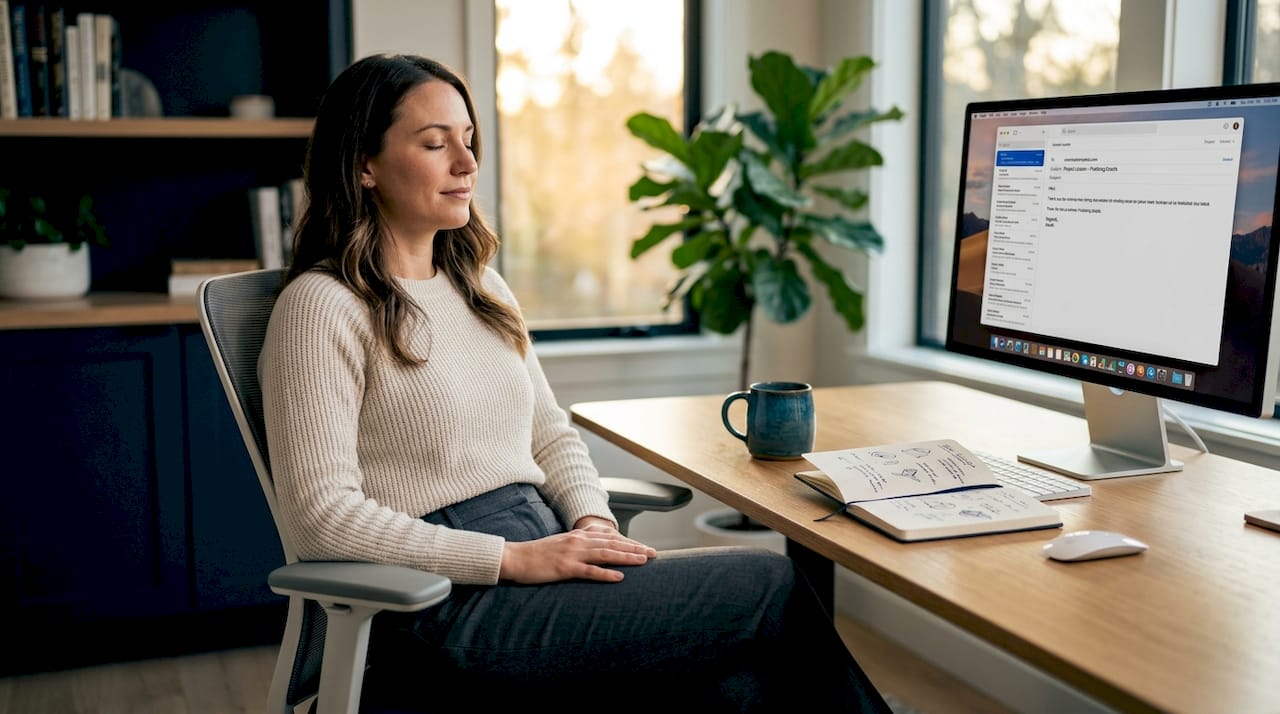
Focused breathing. Sit upright, close your eyes if comfortable, and focus on the sensation of each breath for one minute. Mayo Clinic recommends starting with just one minute and working up gradually. This is your entry point, and it genuinely works even at that short duration.
-
The between-task pause. Before switching from one task to another, take three slow breaths. Notice how your body feels. Let your shoulders drop. This is a legitimate mindfulness session, not a placeholder for “real” practice. Done consistently, it prevents the mental clutter of carrying one task’s stress into the next.
-
Body scan at your desk. Starting from the top of your head, slowly move your attention down through your body, noticing tension without trying to force it away. This takes two to three minutes and is especially useful mid-afternoon when focus tends to fade.
-
Mindful walking. During any walk, from your desk to the kitchen or from the parking lot to your office, focus on the physical sensations of each step. Notice the ground, your pace, the temperature. Your mind will wander. That is fine. Bring it back.
-
Habit stacking. Calm recommends starting with just two minutes daily and attaching your practice to an existing routine. Brew your coffee, then sit quietly for two minutes before checking email. That is it. Two minutes every day beats a thirty-minute session twice a month.
The beginner challenge everyone faces is distraction. Your mind will wander. You will start thinking about your deadline or what you said in that meeting. Labeling the thought, mentally noting “planning” or “worrying,” then returning attention to your breath is the practice. Not the elimination of thought. The return.
Pro Tip: If you work in a fast-moving marketing environment, habit stack a two-minute breathing exercise before your first team standup. It takes nothing from your schedule and resets your baseline before the day’s pressure builds.
Creating a mindful workplace culture
Individual practice is powerful, but organizations can multiply that impact. The key is designing programs that people actually use, rather than wellness theater that looks good in an all-hands presentation and fades within six weeks.
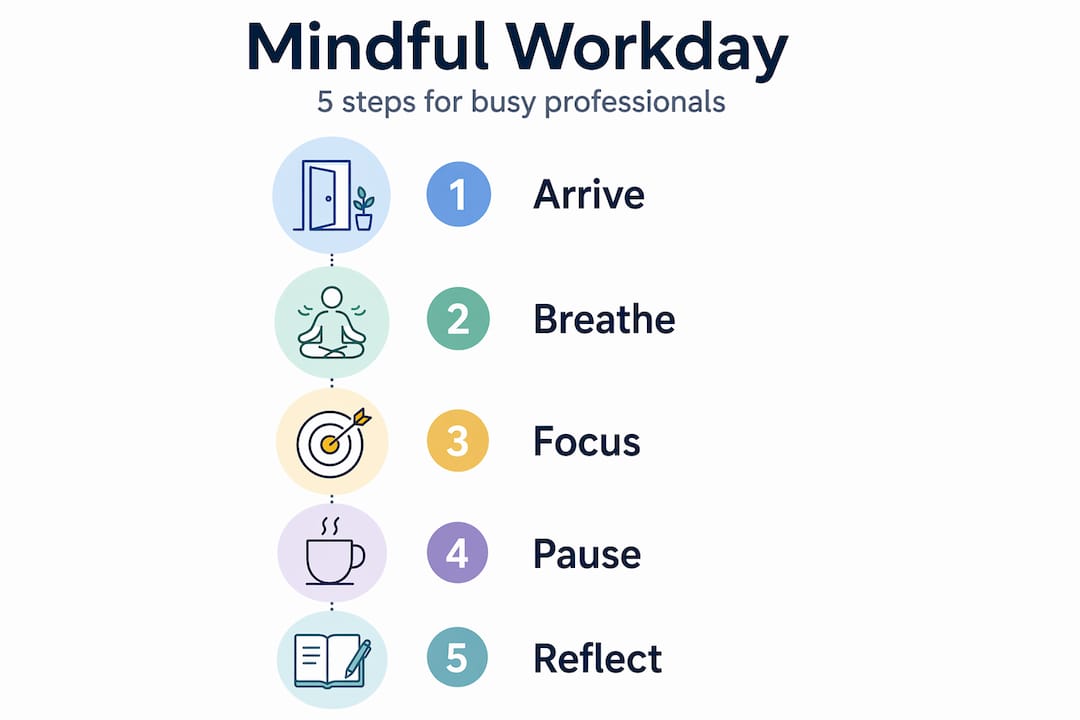
Start with clear goals. Employee-focused research shows that programs perform best when KPIs target psychological outcomes: stress levels, self-reported anxiety, sleep quality, and resilience scores. Avoid tying ROI claims to blood pressure or cortisol reduction. The evidence does not support those endpoints, and overpromising poisons future buy-in when results do not materialize.
Here is what a well-designed workplace mindfulness program looks like:
- Accessible by default. Sessions are short (ten to fifteen minutes), available asynchronously, and never mandatory. Forced mindfulness is counterproductive.
- Led with authenticity. When managers practice openly, skip the irony, and share their own experience with stress reduction at work, adoption rates climb.
- Structured without pressure. Guided audio sessions remove the “what do I actually do” barrier that stops beginners before they start.
- Evaluated honestly. Use pre- and post-surveys measuring stress and well-being. Adjust programs based on what employees report, not what looks good in a deck.
Team dynamics benefit too. When people on the same team practice mindful leadership strategies, communication tends to become less reactive. Feedback conversations that used to trigger defensiveness become more manageable. That is not a soft benefit. It is a measurable shift in how work gets done. Supporting inclusive workplace cultures aligns naturally with mindful environments where people feel heard rather than rushed.
Common pitfalls and how to get past them
Most people who try mindfulness at work and quit do so because of one of three things: they expected a quiet mind, they expected fast results, or they judged themselves harshly every time their attention wandered.
Let’s address each directly.
The quiet mind myth. Mindfulness does not produce silence in your head. Your mind will generate thoughts constantly. The goal is to notice them without being controlled by them. Once you stop fighting your own thinking, practice becomes much easier.
Expecting dramatic productivity changes overnight. Mindfulness research shows modest, cumulative gains. Do not measure success after one week. Measure it after thirty days of two-minute sessions. The shift tends to show up in how you respond to stressful emails rather than how many tasks you complete per hour.
Self-judgment after a scattered session. Every practitioner, regardless of experience, has sessions where the mind will not settle. That is not failure. Returning to the breath after a distraction is the rep. The more you do it, the stronger the muscle.
Choose programs from credible sources. Workplace meditation practices built around evidence-based frameworks like Mindfulness-Based Stress Reduction (MBSR) consistently outperform generic relaxation content. Program quality and facilitator skill genuinely matter to outcomes.
One more practical note: digital distractions drive workplace stress in ways that compound. Pairing mindfulness with intentional limits on notification culture creates a reinforcing loop that mindfulness alone cannot achieve.
My honest take on mindfulness at work
By Maayan
I will tell you what took me longer than it should have to learn: the goal was never a quiet mind. I spent months thinking I was bad at mindfulness because my thoughts kept interrupting. Turns out, that is the practice. Every return of attention is a repetition. You are training something real.
What changed my relationship with mindfulness was attaching it to transitions rather than scheduling it as a standalone activity. Before a difficult call, three breaths. After a meeting that ran long, thirty seconds of noticing where tension is sitting in my body. These are not substitutes for a longer practice. But for most professionals working under genuine pressure, they are what actually gets done consistently.
I have watched professionals treat stress reduction at work as a weekend project. “I’ll do a proper meditation retreat next quarter.” Meanwhile, the compounding pressure of daily reactive behavior goes unmanaged. Short, imperfect practice done daily beats perfect practice done never.
Over time, the biggest shift I noticed was in decision-making, not productivity metrics. I became slower to react and faster to think. That gap between stimulus and response that mindfulness trains is where your best professional judgment lives.
Imperfect practice still yields meaningful results. Start with two minutes tomorrow, before your first meeting. That is enough.
— Maayan
How Seo-analytic can support your focused work practice
Managing digital overwhelm is a real component of workplace stress, and it compounds fast for business owners and marketing teams. At Seo-analytic, we build digital systems that work with your focus rather than against it, so you spend less mental energy on scattered tools and more on work that matters.
Whether you are building an online presence from scratch or tightening up your marketing operations, our resources are designed to cut through the noise. Start with the digital marketing basics guide to build a clear, focused strategy. Or if your website needs to stop being a source of frustration, the business website building guide gives you a practical path forward. Clarity in your digital setup supports the same clarity you are building in your mind.
FAQ
What is mindfulness at work?
Mindfulness at work is the practice of intentionally paying attention to your present-moment experience, including thoughts, emotions, and physical sensations, without judgment. It applies during any work activity and does not require silence or meditation sessions.
How long does mindfulness practice need to be to reduce stress?
Even one minute of focused breathing can reduce stress and improve clarity. Research supports short, consistent daily sessions as more effective than occasional longer ones.
Does mindfulness actually improve workplace productivity?
A meta-analysis of 99 studies found modest improvements in task performance compared to passive controls, but results were not significant compared to active controls. Productivity gains are real but gradual, primarily through improved focus and emotional regulation.
What are the best mindfulness exercises for employees at their desks?
Focused breathing for one to two minutes, brief body scans, and three-breath pauses between tasks are the most accessible mindfulness techniques at work. All can be done seated without any special equipment or dedicated space.
How do organizations measure the success of mindfulness programs?
The strongest evidence supports measuring psychological outcomes: perceived stress, anxiety, well-being, and sleep quality. Programs targeting these KPIs consistently show significant improvements, while cardiometabolic measures like blood pressure have not shown reliable change in employee studies.