

Every successful American agency reaches a point where traditional workflows simply cannot keep pace with complex client demands. Project management methods become the backbone for transforming scattered tasks into organized, high-impact results. For digital marketing leaders aiming to drive team efficiency and deliver outstanding client experiences, understanding the difference between Agile, Waterfall, and Hybrid models is crucial for building smarter, more adaptable project processes.
Table of Contents
- Defining Project Management Methods For Agencies
- Key Types: Agile, Waterfall, And Hybrid Models
- Core Features And How Methods Work
- Emerging Trends Impacting Project Management In 2026
- Roles, Responsibilities, And Common Pitfalls
- Comparing Methodologies For Digital Marketing Success
Key Takeaways
| Point | Details |
|---|---|
| Understanding Methodologies | Selecting the right project management methodology, such as Agile, Waterfall, or Hybrid, is crucial for addressing specific operational challenges in digital marketing agencies. |
| Regular Assessments | Conducting periodic audits and performance assessments of chosen methodologies can ensure alignment with team capabilities and evolving client demands. |
| Role Clarity | Clearly defining roles and responsibilities within project teams enhances communication and accountability, minimizing common pitfalls such as scope creep and misaligned expectations. |
| Adapting to Trends | Agencies must proactively integrate emerging trends like AI and hybrid work models to maintain competitiveness and improve operational efficiency in a dynamic landscape. |
Defining Project Management Methods for Agencies
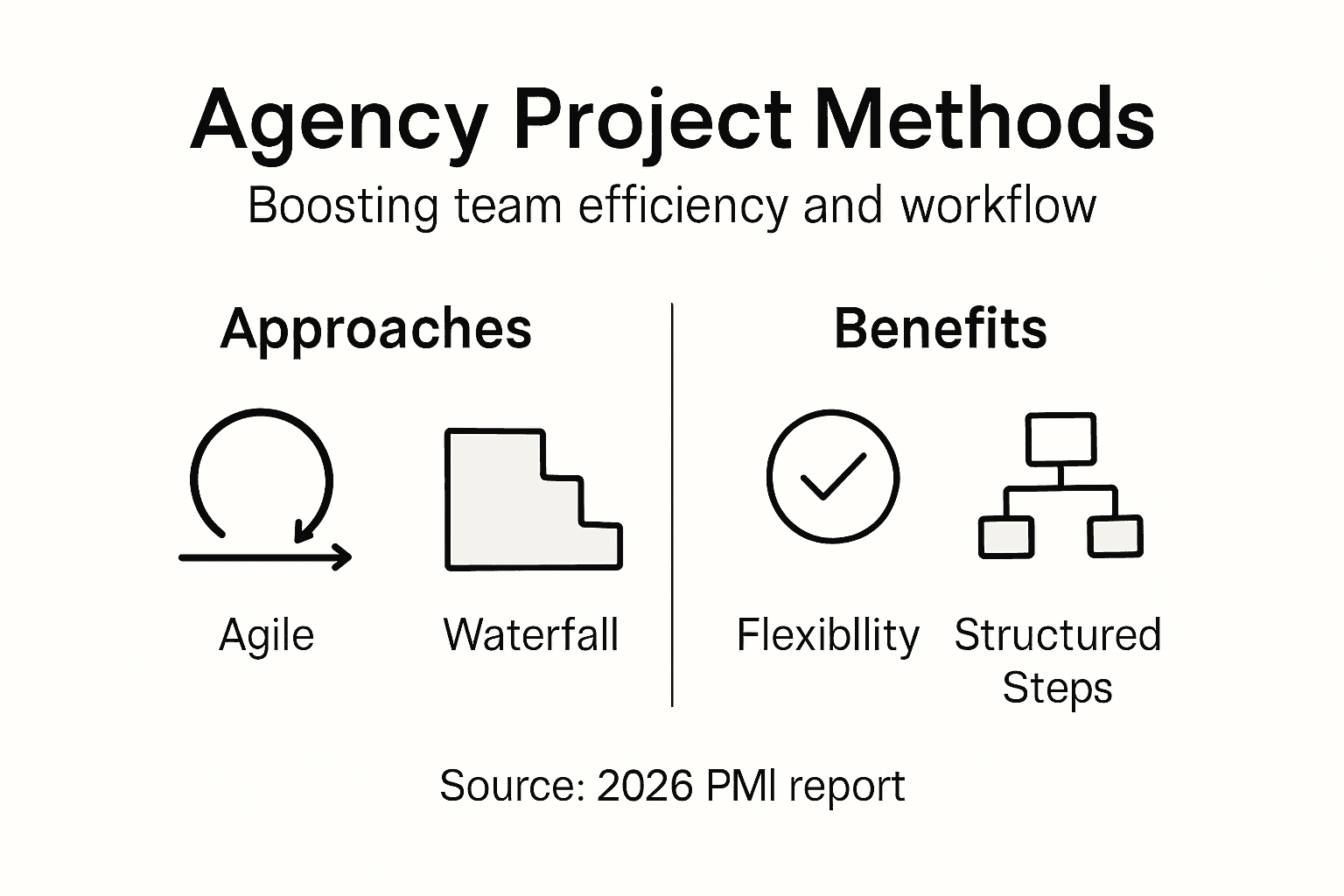
Project management methods represent structured approaches for digital marketing agencies to plan, execute, and deliver client projects efficiently. Unlike generic business processes, these methodologies provide specialized frameworks tailored to the complex, fast-paced environment of modern agency work. Project management life cycle elements are critical for transforming client objectives into successful outcomes.
Agencies typically utilize several core project management methodologies, each designed to address specific operational challenges. The primary methods include:
- Waterfall Method: Linear, sequential approach best suited for projects with clearly defined requirements
- Agile Method: Flexible, iterative process emphasizing continuous adaptation and client collaboration
- Scrum Framework: Team-oriented approach with short, intensive work sprints and regular progress reviews
- Kanban Method: Visual workflow management focusing on reducing bottlenecks and improving operational efficiency
Strategic alignment remains paramount when selecting a project management approach. Academic research highlights that successful methodologies must integrate seamlessly with an agency’s unique operational context, strategic goals, and client expectations.
Effective project management requires more than simply selecting a methodology. Digital marketing agencies must develop robust implementation strategies that consider team dynamics, technological capabilities, and client diversity. This means creating adaptable frameworks that can pivot quickly based on project complexity, team expertise, and evolving client needs.
Pro tip: Conduct a comprehensive agency methodology audit every six months to ensure your project management approach remains aligned with your team’s evolving capabilities and client demands.
Key Types: Agile, Waterfall, and Hybrid Models
Project management methodologies represent strategic frameworks that digital marketing agencies use to navigate complex client projects. Understanding the nuanced differences between Agile, Waterfall, and Hybrid models becomes crucial for delivering consistent, high-quality results. Systematic literature reviews reveal the evolving landscape of these methodological approaches, highlighting their unique strengths and adaptability.
Three primary project management models dominate agency workflows:
-
Waterfall Model: Sequential, linear approach with distinct project phases
- Best for projects with clear, stable requirements
- Minimal client intervention during development
- Strong documentation and predetermined milestones
-
Agile Method: Iterative, flexible framework emphasizing continuous collaboration
- Rapid adaptation to changing client needs
- Regular feedback and incremental progress
- Enhanced team responsiveness and client engagement
-
Hybrid Model: Combines strengths of Waterfall and Agile approaches
- Structured governance with adaptive implementation
- Customizable to specific project complexity
- Balances predictability with flexibility
Comparative academic research demonstrates that successful digital marketing agencies increasingly adopt hybrid models to optimize project management efficiency. This approach allows teams to leverage structured planning while maintaining the responsiveness required in dynamic client environments.

Effective methodology selection depends on multiple factors, including project complexity, team expertise, client expectations, and technological constraints. Agencies must develop a nuanced understanding of each model’s strengths and limitations to create tailored project management strategies that align with their unique operational context.
Here’s a side-by-side summary to help agencies quickly compare core project management methods:
| Methodology | Distinctive Advantage | Potential Drawback |
|---|---|---|
| Waterfall | Predictable results with thorough planning | Rigid, slow to adapt to change |
| Agile | Highly responsive to evolving client needs | Can lack structure for complex projects |
| Hybrid | Flexibly blends structure and adaptability | Needs strong team alignment |
Pro tip: Conduct quarterly methodology performance assessments to identify which project management approach delivers the most consistent results for your specific agency workflow.
Core Features and How Methods Work
Project management methodologies are complex systems with distinct operational frameworks that define how digital marketing agencies execute and deliver client projects. Research on work management components reveals three critical dimensions that distinguish these approaches: work management, release management, and team management strategies.
Each methodology exhibits unique core features that impact project execution:
-
Waterfall Method Features:
- Linear, sequential progression
- Comprehensive upfront planning
- Detailed documentation requirements
- Minimal changes after initial design phase
- Predictable budget and timeline constraints
-
Agile Method Features:
- Iterative development cycles
- Continuous client collaboration
- Flexible scope and adaptable requirements
- Regular sprint-based progress tracking
- Rapid response to changing project dynamics
-
Hybrid Method Features:
- Combines structured and flexible approaches
- Customizable workflow management
- Balanced risk mitigation strategies
- Adaptable governance frameworks
- Selective implementation of methodology components
Comparative analysis of methodological approaches demonstrates that successful implementation depends on understanding each method’s intrinsic strengths and potential limitations. Digital marketing agencies must carefully evaluate their specific project requirements, team capabilities, and client expectations when selecting an appropriate project management approach.
Understanding these methodological nuances enables agencies to create more responsive, efficient project delivery systems that can adapt to complex and changing client demands. The key lies in recognizing that no single approach is universally superior – strategic selection and flexible implementation are paramount.
Pro tip: Develop a methodology selection matrix that scores potential approaches based on your agency’s specific project types, team skills, and client diversity.
Emerging Trends Impacting Project Management in 2026
The project management landscape is undergoing radical transformation, driven by technological innovations and shifting workplace dynamics. Current project management trends reveal a profound shift towards more adaptive, technology-enhanced methodologies that prioritize efficiency, flexibility, and intelligent decision-making.
Key emerging trends reshaping project management for digital marketing agencies include:
-
Artificial Intelligence Integration:
- AI-powered predictive analytics
- Automated workflow optimization
- Intelligent resource allocation
- Real-time risk assessment capabilities
- Enhanced decision-making algorithms
-
Hybrid Work Models:
- Distributed team management strategies
- Advanced collaboration technologies
- Flexible geographical work arrangements
- Digital communication infrastructure
- Performance tracking across remote environments
-
Sustainability and Compliance:
- Integrated environmental impact tracking
- Regulatory compliance frameworks
- Transparent reporting mechanisms
- Ethical project management practices
- Carbon footprint measurement tools
PMI’s Future of Project Work report underscores the critical importance of building organizational capabilities that can seamlessly adapt to these emerging technological and operational paradigms. Digital marketing agencies must proactively invest in skill development, technological infrastructure, and flexible methodological approaches to remain competitive.
The convergence of technological innovation, workforce transformation, and strategic flexibility will define successful project management practices in 2026. Agencies that can quickly integrate these emerging trends will gain significant competitive advantages, enabling more efficient, responsive, and intelligent project delivery.
The following table highlights how emerging project management trends may impact agency operations by 2026:
| Trend | Agency Benefit | Implementation Challenge |
|---|---|---|
| AI Integration | Accelerates data-driven planning | High upfront technology investment |
| Hybrid Work Models | Enables broader talent access | Requires advanced communication tools |
| Sustainability Focus | Enhances client trust and compliance | Increases reporting complexity |
Pro tip: Create a quarterly technology and methodology assessment process to continuously evaluate and integrate emerging project management trends and tools.
Roles, Responsibilities, and Common Pitfalls
Effective project management in digital marketing agencies requires crystal-clear role definition and strategic accountability. Project manager responsibilities encompass a complex network of strategic oversight, team coordination, and precise execution across multiple dimensions.
Key roles in project management include:
-
Project Manager:
- Overall project strategic leadership
- Budget and resource allocation
- Risk management and mitigation
- Stakeholder communication
- Performance tracking and reporting
-
Executive Sponsor:
- Strategic project alignment
- High-level organizational support
- Final decision-making authority
- Budget approval
- Long-term project vision
-
Project Champion:
- Internal project advocacy
- Cross-departmental collaboration
- Removing organizational barriers
- Maintaining project momentum
- Facilitating team engagement
Project management specialists are crucial in coordinating complex workflows and ensuring precise project execution. Their role demands exceptional communication skills, technical understanding, and strategic thinking to navigate intricate project landscapes.
Common pitfalls that can derail project success include poor communication, inadequate risk management, scope creep, and misaligned team expectations. Digital marketing agencies must proactively develop robust frameworks that anticipate and mitigate these potential challenges through continuous monitoring, transparent reporting, and adaptive planning strategies.
Pro tip: Implement a monthly cross-functional review process that allows team members from different roles to provide candid feedback on project management effectiveness.
Comparing Methodologies for Digital Marketing Success
Digital marketing agencies face complex challenges that demand sophisticated project management approaches. Hybrid project management strategies offer a nuanced solution that bridges traditional and modern methodological frameworks, enabling more adaptive and responsive project delivery.
Methodology selection criteria for digital marketing projects include:
-
Campaign Complexity:
- Simple, repeatable campaigns
- High-variability marketing initiatives
- Experimental marketing strategies
- Client-driven project requirements
- Budget and timeline constraints
-
Performance Measurement Factors:
- Iteration speed
- Client feedback integration
- Cost efficiency
- Adaptability to market changes
- Team productivity metrics
-
Methodology Alignment Indicators:
- Project predictability
- Required flexibility
- Communication intensity
- Risk management needs
- Stakeholder engagement level
Comparative methodology guides highlight that successful digital marketing agencies must develop a contextual understanding of each approach’s strengths and limitations. Agile works best for dynamic, fast-changing campaigns, while Waterfall provides structure for well-defined marketing initiatives.
The key to successful project management lies not in rigidly adhering to a single methodology, but in creating a flexible framework that can adapt to unique project requirements. Digital marketing agencies must continuously evaluate and refine their approach, ensuring alignment with evolving client needs and technological capabilities.
Pro tip: Develop a methodology selection matrix that scores potential approaches based on your specific marketing project characteristics and team capabilities.
Elevate Your Agency Efficiency with Expert Digital Marketing Solutions
The article highlights the challenge of selecting and implementing the right project management methods like Agile, Waterfall, and Hybrid to meet client demands and optimize agency workflows. If your agency struggles with aligning strategic project management approaches or managing complex digital marketing projects efficiently, you are not alone. Key pain points like adapting quickly to changing client needs and maintaining consistent delivery require tailored tools and expert support.
At SEO Analytic, we specialize in providing comprehensive digital marketing and website building services designed to complement your project management strategy. Our solutions empower your team to increase website traffic and conversions while ensuring your campaigns stay flexible and responsive. We understand that successful project delivery depends not only on methodology but also on execution, which is why we offer tools and expert insights that adapt perfectly to your agency’s unique workflows.
Unlock your agency’s full potential with our expert services that integrate smoothly with your chosen project management approach. If you want to transform how your team handles complex projects and client engagements, take the next step with us.
Discover how our tailored digital marketing expertise can boost your agency’s project efficiency and client satisfaction. Visit SEO Analytic now to get started and find out how we support agencies in mastering both strategy and execution with powerful solutions.
Frequently Asked Questions
What are the main project management methods used by digital marketing agencies?
Agencies typically utilize several core project management methodologies, including Waterfall, Agile, Scrum, and Kanban. Each of these methods is designed to address specific operational challenges and project requirements.
How do I choose the right project management methodology for my agency?
Selecting the appropriate project management methodology depends on various factors such as project complexity, team expertise, client expectations, and technological constraints. It’s essential to evaluate the strengths and limitations of each method to create a tailored approach that fits your agency’s operational context.
What is the difference between Agile and Waterfall project management methodologies?
The Waterfall method is a linear, sequential approach ideal for projects with clearly defined requirements, while the Agile method is flexible and iterative, emphasizing continuous adaptation and collaboration with clients. Agile allows for rapid adjustments based on client feedback, while Waterfall relies on thorough upfront planning and documentation.
What are some common pitfalls in project management for digital marketing agencies?
Common pitfalls include poor communication, inadequate risk management, scope creep, and misaligned team expectations. It’s crucial for agencies to develop frameworks that anticipate these challenges and implement strategies to mitigate them, ensuring successful project execution.
Recommended
- Invoice Management Online: Boosting Agency Cash Flow – seo analytic
- 7 Essential Productivity Tips for Entrepreneurs to Succeed – seo analytic
- 7 Smart Ways to Save Money in Business Operations – seo analytic
- What is Agile Marketing? Understanding Its Importance – seo analytic
- urban planning collaboration software | 3D Cityplanner