

TL;DR:
- Loyalty programs incentivize repeat purchases, strengthen emotional bonds, and generate high ROI for businesses. Effective structures include points-based, tiered, gamified, paid memberships, and experiential rewards, each suited to different brand types. Success depends on seamless technology integration, immediate value offerings, personalized rewards, and viewing programs as long-term architecture rather than short-term promotions.
Loyalty programs are defined as structured reward systems that incentivize repeat purchases, increase customer lifetime value, and build emotional connection between a brand and its buyers. 74% of customers are more likely to return to brands offering loyalty programs, making this one of the highest-ROI customer retention strategies available to any business. Programs like Starbucks Rewards and Sephora Beauty Insider have proven that the right loyalty program ideas go far beyond discounts. They create identity, community, and habitual buying behavior. The most effective programs combine immediate rewards, personalized experiences, and aspirational tiers to keep customers engaged long after the first purchase.
1. Points-based programs with omnichannel earning
Points-based programs remain the most widely adopted loyalty structure because they are intuitive, scalable, and easy to communicate. Customers earn points on purchases and redeem them for discounts, free products, or exclusive perks. The key differentiator in 2026 is where customers can earn. Omnichannel earning across in-store, online, and mobile app touchpoints removes friction and increases program participation rates significantly.
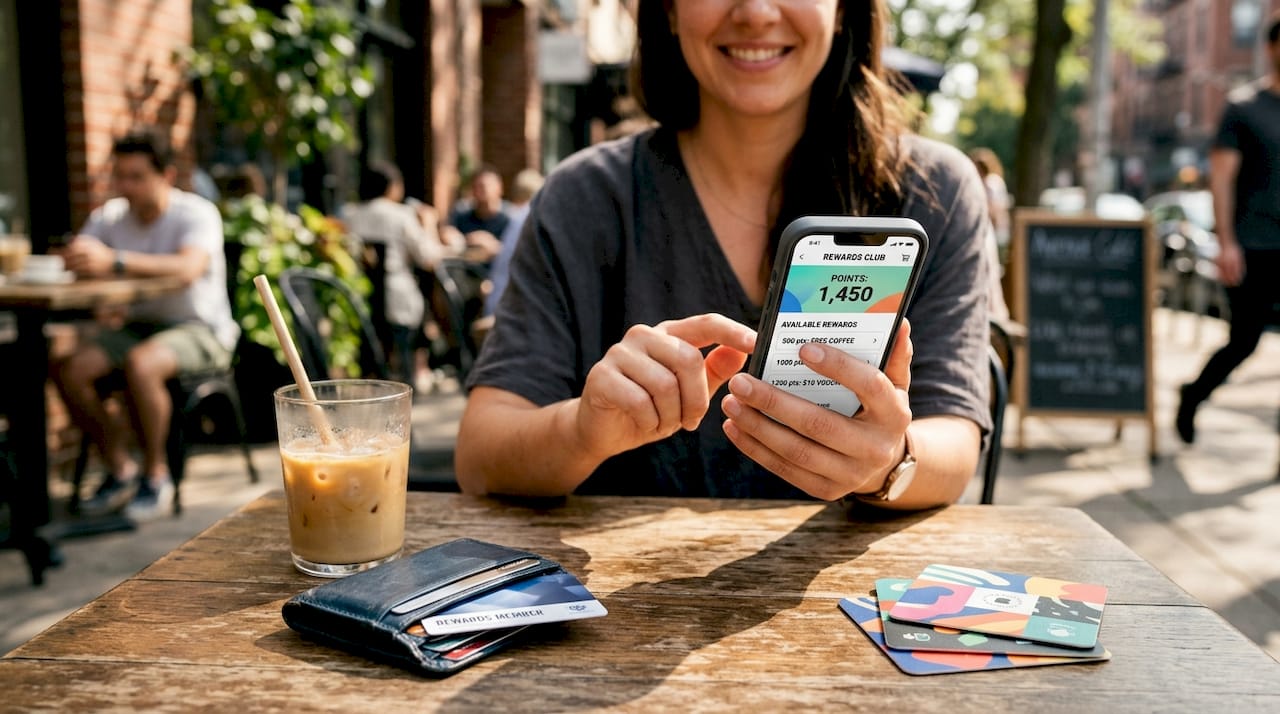
71% of consumers are motivated by immediate discounts in loyalty programs, followed by ease of redemption and multi-channel earning. This tells you that complexity kills engagement. Keep point values simple, make redemption available at checkout, and let customers earn across every channel they already use.
2. Tiered loyalty levels with aspirational status
Tiered programs create a status ladder that motivates customers to spend more to unlock better rewards. Sephora Beauty Insider uses three tiers (Insider, VIB, and Rouge) to gate exclusive events, early product access, and free shipping behind earned status. The psychology here is powerful. Customers who are close to the next tier spend more to cross the threshold.
Successful programs build an identity layer that gives members social status and community belonging beyond points. Tiers work best when the gap between levels feels achievable but not trivial. If your top tier is too easy to reach, it loses its aspirational pull entirely.
3. Gamification: missions, badges, and challenges
Gamification transforms routine purchases into engaging experiences by adding game mechanics to the loyalty structure. IKEA’s loyalty campaign uses missions and levels to gamify point earning and clarify benefits, turning what would be a passive rewards card into an active participation system. Customers complete challenges, earn badges, and unlock rewards through behavior rather than spend alone.
Transforming routine customer actions into missions increases engagement and creates a playful loyalty experience that keeps members returning to check their progress. This model works especially well for brands with diverse product catalogs where you want to encourage customers to explore beyond their usual purchases.
Pro Tip: Design missions around behaviors that increase lifetime value, not just purchase frequency. A “try three new categories” mission drives product discovery and raises average order value simultaneously.
4. Paid or subscription-based loyalty programs
Amazon Prime is the most cited example of a paid loyalty program, and for good reason. Customers who pay for membership spend more to justify the cost, creating a self-reinforcing retention loop. Paid programs work best when the perceived value of benefits clearly exceeds the membership fee from day one.
The model suits businesses with high purchase frequency or strong brand affinity. A coffee subscription that offers free drinks, priority ordering, and member-only blends gives customers a reason to pay upfront and return consistently. The key is front-loading visible benefits so new members feel the value immediately rather than waiting to accumulate it.
5. Experiential and non-monetary rewards
Not every reward needs to be a discount. Experiential rewards like private events, early product launches, factory tours, or co-creation opportunities create emotional connections that discounts cannot replicate. Nike’s member-only training events and Lululemon’s community fitness classes are strong examples of non-monetary loyalty incentives that build brand identity alongside retention.
These rewards are particularly effective for premium brands where discounting would erode perceived value. A customer who attends a brand event becomes an advocate, not just a repeat buyer. That advocacy drives organic referrals and user-generated content at no additional acquisition cost.
6. Referral incentives integrated into loyalty
Referral programs become significantly more powerful when integrated directly into a loyalty structure. Instead of a standalone referral link, members earn bonus points or tier upgrades for every friend they bring in. This ties organic growth to your existing retention engine and rewards your most loyal customers for the behavior you want most.
Referral conversion directly reduces customer acquisition cost, which is one of the most expensive line items for any growing brand. When a loyal customer refers a friend, that new customer arrives with higher trust and a stronger likelihood of becoming loyal themselves. The compounding effect on acquisition economics is measurable within the first 90 days.
7. Social and behavioral rewards for UGC and reviews
Rewarding customers for writing reviews, sharing photos, or creating content about your brand turns your loyalty program into a content engine. Brands like Glossier built significant organic reach by incentivizing community participation through points and recognition. This model works because it rewards behavior that benefits both the customer and the brand simultaneously.
Social rewards also extend program engagement beyond the purchase moment. A customer who earns points for posting an Instagram story about your product is interacting with your brand between purchases, which keeps your brand top of mind and increases the likelihood of their next purchase.
8. Personalized rewards based on purchase behavior
Generic rewards are the fastest way to make a loyalty program feel transactional. Personalized rewards, triggered by individual purchase history and preferences, make customers feel seen rather than processed. A customer who buys running shoes every six months should receive a reminder reward tied to that cycle, not a generic 10% off coupon.
Personalized marketing emails that surface relevant rewards based on browsing and purchase data consistently outperform broadcast loyalty communications. Platforms like Klaviyo enable this kind of behavioral segmentation at scale, connecting loyalty event data directly to email and SMS flows for timely, relevant outreach.
9. Instant discounts and welcome bonuses
The first 30 days of a loyalty program membership determine whether a customer stays engaged or forgets they signed up. Welcome bonuses, instant discounts on the first redemption, and early reward milestones create the habit loop that sustains long-term participation. A new member who redeems a reward within the first two weeks is far more likely to remain active at 90 days.
Immediate discounts motivate the majority of consumers to engage with loyalty programs. This means your onboarding sequence should deliver a tangible reward quickly, not after a customer has spent $500. Lower the first redemption threshold intentionally to create the experience of winning early.
10. Surprise and delight rewards
Spontaneous rewards, sent with no prior announcement, generate disproportionate emotional impact compared to their cost. A birthday reward, an unexpected double-points day, or a surprise free product with an order creates a moment of genuine delight that customers remember and share. Starbucks uses surprise star bonuses to re-engage members who have been inactive for 30 or more days.
The unpredictability is the point. Customers who know exactly when and how they will earn rewards treat the program as a transaction. Customers who occasionally receive unexpected rewards treat the brand as a relationship. That distinction drives the word-of-mouth and social sharing that makes loyalty programs into media properties.
How different program structures compare
Matching your loyalty structure to your sales frequency and purchase type is the single most important structural decision you will make. Points-based systems suit high-frequency, low-ticket purchases like coffee or groceries. Tiered and paid programs fit higher-cost products or brands with strong community identity. Hybrid models that combine points with tiers and gamification deliver the highest engagement but require more operational investment.
| Program type | Best for | Strength | Watch out for |
|---|---|---|---|
| Points-based | High-frequency, low-ticket | Simple, scalable | Can feel transactional |
| Tiered | Mid-to-high ticket, brand-loyal | Aspirational, drives spend | Tiers must feel achievable |
| Paid membership | Strong brand affinity, frequent buyers | High commitment, self-justifying | Perceived value must be immediate |
| Gamified | Diverse catalog, younger audiences | High engagement, habit-forming | Complexity can confuse older segments |
| Hybrid | Established brands with scale | Maximizes engagement across segments | Requires strong tech infrastructure |
The economics that make loyalty programs profitable
Program economics determine whether your loyalty investment builds value or erodes margin. Keep point issuance at 3-5% of GMV and target redemption rates between 40% and 60% to confirm that rewards are valued without creating unsustainable liability. A redemption rate below 40% signals that rewards feel irrelevant. A rate above 60% signals that your points are too easy to earn relative to their cost.
Three financial metrics every loyalty program manager should track from launch:
- Incremental repurchase lift: Target a 15 to 25 point improvement in 90-day repurchase rates to justify program investment within 12 months.
- Redemption rate: Monitor monthly to catch reward relevance issues before they compound into disengagement.
- Referral conversion impact: Measure how referred customers compare to direct acquisition customers in lifetime value and repurchase frequency.
Most effective loyalty programs operate as compounding growth engines, architecting social identity and behavioral triggers rather than simply dispensing points. This framing matters because it changes how you allocate budget. Loyalty is not a discount line item. It is a growth channel with measurable return.
Pro Tip: Run a 90-day pilot with a segment of your most active customers before full launch. Their redemption behavior and feedback will calibrate your point values and reward catalog far more accurately than any pre-launch model.
Technology and platform integration for loyalty success
Technology determines whether your loyalty program delivers a consistent experience or a fragmented one. Loyalty event data integrated with platforms like Triple Whale and Klaviyo enables real-time attribution, so you can see exactly which loyalty actions drive paid media efficiency and organic growth. This turns your program into a first-party data asset, not just a retention tool.
Key technology capabilities to prioritize when selecting a loyalty platform:
- Behavioral segmentation: The ability to trigger rewards and communications based on purchase history, browsing behavior, and lifecycle stage.
- Omnichannel redemption: Customers should earn and redeem across online and offline channels without friction.
- API flexibility: Open integrations with your email, SMS, CRM, and attribution tools prevent data silos that undermine program performance.
Most consumers prefer loyalty communications through email and apps, which means your platform must support both channels natively. A loyalty program that lives only in a physical card or a single channel leaves significant engagement on the table. Check out rewards programs comparisons to see how leading brands structure their communication and redemption flows across markets.
Key takeaways
The most profitable loyalty programs combine immediate rewards, tiered aspiration, and behavioral personalization to drive compounding retention rather than one-time discounts.
| Point | Details |
|---|---|
| Lead with immediate value | Welcome bonuses and fast first redemptions create the habit loop that sustains long-term engagement. |
| Match structure to your model | Points suit high-frequency buyers; tiers and paid memberships fit higher-ticket or community-driven brands. |
| Protect your margins | Keep point issuance at 3-5% of GMV and target 40-60% redemption rates to stay profitable. |
| Use technology as a multiplier | Integrate loyalty event data with Klaviyo and attribution tools to turn the program into a growth channel. |
| Build identity, not just transactions | Programs that create social status and community belonging retain customers that discounts alone cannot. |
Why loyalty programs are architecture, not promotions
I have worked with dozens of business owners who launch loyalty programs as a defensive move, usually in response to a competitor or a dip in repeat purchase rates. The programs that fail almost always share one trait: they were designed as promotions with an expiration date rather than as permanent architecture.
The brands that build loyalty programs worth studying, Starbucks, Sephora, Amazon, treat the program as a core product. They invest in the experience, iterate on the reward catalog based on redemption data, and use the program to generate first-party behavioral data that feeds every other marketing channel. That data flywheel is what separates a loyalty program that compounds growth from one that just costs money.
My honest observation after years of working in digital marketing is that most small and mid-size businesses underestimate how quickly a well-designed program pays back. If you hit that 15 to 25 point lift in 90-day repurchase rates within the first year, the program has already justified its cost. The community, the data, and the referral volume are all upside from that point forward. Start smaller than you think you need to, test your reward values with a real segment, and let the data tell you what to scale.
— Maayan
Build the digital foundation your loyalty program needs
A loyalty program is only as strong as the customer experience surrounding it. If your website is slow, hard to navigate, or disconnected from your loyalty platform, even the best reward ideas will underperform. Seo-analytic specializes in building responsive, conversion-focused websites that integrate seamlessly with loyalty and marketing tools, so your customers move from discovery to reward redemption without friction.
Whether you are launching your first program or rebuilding an underperforming one, the right digital infrastructure makes every loyalty idea work harder. Start with the website building guide to set up the foundation, then explore Seo-analytic’s social media marketing resources to amplify your program reach across every channel your customers use.
FAQ
What are the most effective loyalty program ideas for small businesses?
Points-based programs with easy redemption and welcome bonuses deliver the fastest results for small businesses because they are low-cost to launch and immediately motivate repeat purchases. Tiered programs become viable once you have a customer base large enough to make status meaningful.
How much should a loyalty program cost to run?
Point issuance should stay at 3-5% of GMV to protect margins, with redemption rates targeted between 40% and 60%. Programs that exceed these thresholds risk eroding profitability faster than the incremental revenue from repeat purchases can offset.
Do loyalty programs actually increase customer retention?
74% of customers are more likely to return to brands with loyalty programs, confirming a direct link between program presence and retention. The strongest programs also drive referral growth and first-party data collection alongside repeat purchases.
What technology do I need to run a loyalty program?
At minimum, you need a platform that supports behavioral segmentation, omnichannel redemption, and integration with your email or SMS tool. Platforms that connect with Klaviyo and attribution tools like Triple Whale allow loyalty event data to feed your broader marketing stack in real time.
How do I know if my loyalty program is working?
Track three core metrics: 90-day repurchase rate lift (target 15 to 25 points), redemption rate (target 40 to 60%), and referral conversion from loyalty members versus direct acquisition. These three numbers tell you whether the program is driving retention, delivering relevant rewards, and generating organic growth.