

Every American startup founder knows the stakes are higher when building teams for digital marketing success. Diverse perspectives are more than ethical ideals; they are strategic drivers of innovation and creative problem-solving. As the United States business culture shifts toward multidimensional diversity, founders seeking both growth and market relevance need practical ways to redefine inclusion. This article reveals actionable strategies that unlock diversity’s full impact on digital marketing and team performance.
Table of Contents
- Defining Diversity In Business Contexts
- Types Of Diversity In Startup Teams
- How Diversity Fuels Innovation And Success
- Implementing Diversity In Digital Marketing Strategies
- Addressing Challenges And Common Pitfalls
Key Takeaways
| Point | Details |
|---|---|
| Embrace Diversity as a Strategic Asset | Diversity is essential for creating innovative environments that drive organizational success and resilience. |
| Focus on Multidimensional Diversity | Include demographic, experiential, and cognitive diversity to enhance team problem-solving capabilities. |
| Incorporate Diversity into Marketing | Ensure digital marketing strategies reflect diverse consumer experiences for more authentic engagement. |
| Address Implementation Challenges | Tackle systemic barriers and ensure genuine inclusion through continuous bias training and feedback mechanisms. |
Defining Diversity in Business Contexts
In today’s competitive startup ecosystem, diversity represents far more than demographic representation. Diverse workplace environments encompass a rich tapestry of perspectives, experiences, and unique viewpoints that drive organizational innovation and problem-solving.
Businesses now understand that diversity goes beyond simple numerical quotas. It involves creating environments where individuals from different backgrounds feel genuinely valued, empowered, and capable of contributing their full potential. This approach recognizes that varied perspectives are not just ethical imperatives but strategic advantages that can unlock breakthrough thinking.
Key dimensions of workplace diversity include:
- Cultural background and ethnicity
- Gender identity and expression
- Age and generational perspectives
- Socioeconomic experiences
- Educational and professional pathways
- Cognitive and neurological differences
- Geographic and international perspectives
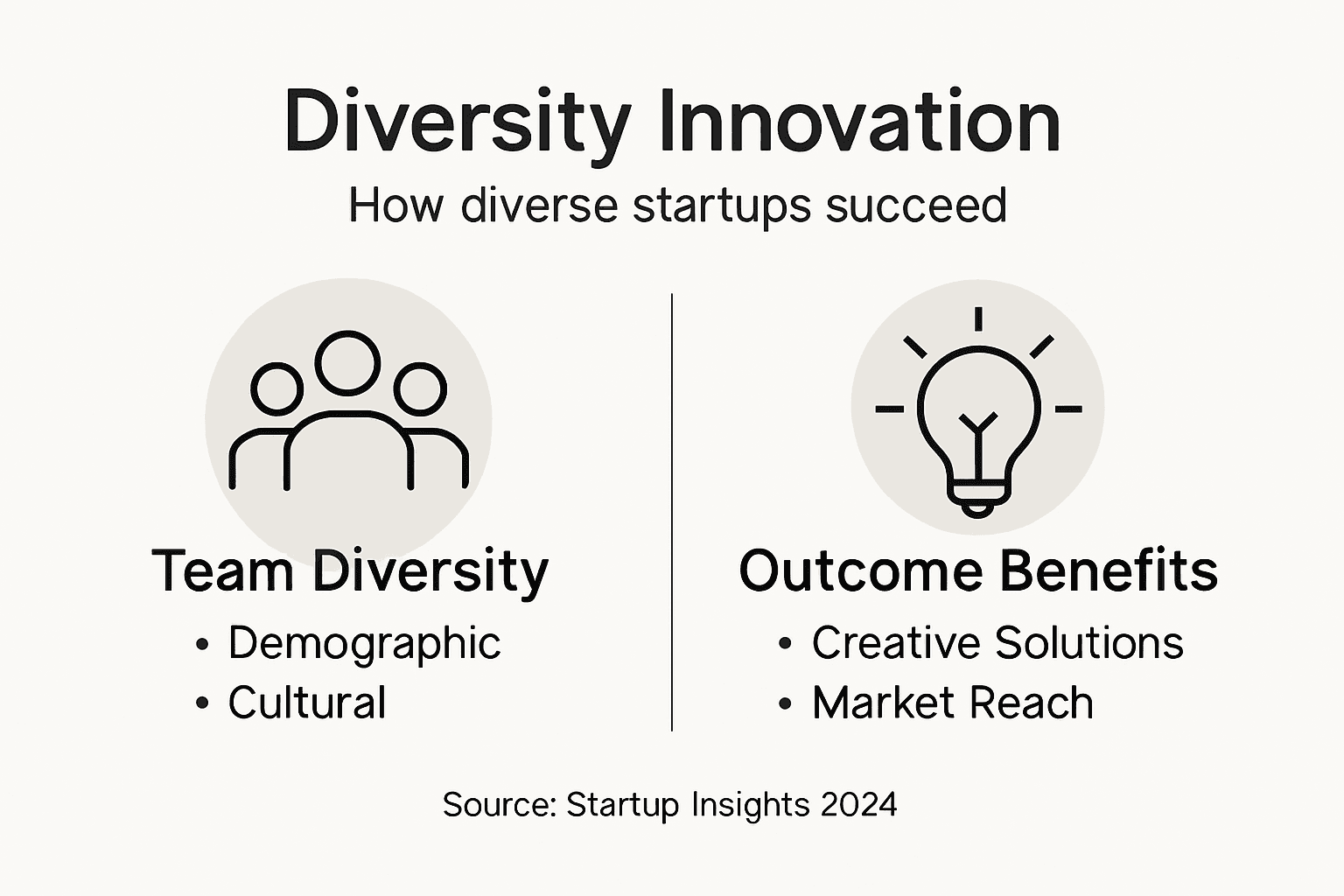
Workplace diversity fundamentally transforms how teams approach challenges. DEI initiatives represent strategic investments that enhance creative problem-solving, improve team dynamics, and create more resilient organizational cultures.
Pro tip: Approach diversity as a dynamic, ongoing process of learning and integration, not a static checklist of demographic requirements.
Types of Diversity in Startup Teams
Startup teams are increasingly recognizing that organizational diversity extends beyond traditional demographic representations. Modern approaches to diversity encompass multiple interconnected dimensions that drive innovation, creativity, and strategic problem-solving.
Three primary types of diversity significantly impact startup team dynamics and performance:
- Demographic Diversity
- Visible characteristics including race and ethnicity
- Gender identity and expression
- Age and generational backgrounds
- Sexual orientation
- Physical abilities
- Experiential Diversity
- Varied educational backgrounds
- Different socioeconomic experiences
- Professional career trajectories
- Geographic and cultural origins
- International work experiences
- Cognitive Diversity
- Unique problem-solving approaches
- Different thinking and reasoning styles
- Varied decision-making processes
- Complementary skill sets
- Alternative perspective generation
Multidimensional diversity transforms how startup teams conceptualize challenges. Corporate diversity disclosures increasingly highlight how integrated perspectives create more robust and adaptable organizational structures.

Here’s how the three main types of diversity in startups influence team performance:
| Diversity Type | Core Influence | Business Benefit |
|---|---|---|
| Demographic | Broadens team perspectives | Strengthens market relevance |
| Experiential | Expands skill and experience | Boosts innovation potential |
| Cognitive | Enhances creative thinking | Improves strategic agility |
Diverse teams don’t just add different people; they multiply innovative potential by integrating unique perspectives and experiences.
Pro tip: Intentionally design recruitment and team-building processes that actively seek complementary perspectives, not just similar backgrounds.
How Diversity Fuels Innovation and Success
Workplace diversity is not just a social imperative but a strategic advantage that directly impacts startup innovation and success. Federal research highlights how diverse teams consistently outperform homogeneous groups by bringing together multiple perspectives, experiences, and problem-solving approaches.
The innovation potential of diverse teams emerges through several key mechanisms:
- Breaking conventional thinking patterns
- Challenging unconscious biases
- Generating more creative solutions
- Reducing groupthink
- Increasing cognitive flexibility
- Enhancing strategic decision-making
Startups that intentionally cultivate diverse teams create environments where different perspectives collide and combine, generating breakthrough insights. Research on organizational complexity demonstrates that as companies incorporate varied functional and cognitive perspectives, their capacity for innovation dramatically increases.
Diversity is not about adding different people to a team; it’s about creating an ecosystem where unique perspectives can genuinely interact and generate novel solutions.
Key innovation drivers in diverse startup teams include:
- Expanded problem-solving approaches
- Enhanced market understanding
- More robust risk assessment
- Improved adaptability
- Broader technology and strategy exploration
Pro tip: Design team interactions and decision-making processes that explicitly value and integrate different perspectives, not just collect them.
Implementing Diversity in Digital Marketing Strategies
Digital marketing demands a nuanced approach to diversity that goes beyond representation. Corporate diversity disclosures reveal that successful startups are integrating inclusive strategies directly into their marketing governance frameworks.
Key strategies for implementing diversity in digital marketing include:
- Conducting comprehensive audience segmentation
- Developing culturally sensitive content
- Utilizing diverse creative teams
- Implementing inclusive language protocols
- Designing representative visual imagery
- Analyzing marketing performance through demographic lenses
Successful digital marketing campaigns leverage innovative audience engagement techniques that authentically reflect diverse consumer experiences. This approach transforms marketing from a one-way communication channel into a multidirectional dialogue that resonates across different cultural and demographic segments.
Diversity in digital marketing is not about checking boxes, but creating genuine connections that reflect the complexity of human experiences.
Effective diversity implementation requires:
- Regular bias training for marketing teams
- Diverse representation in creative roles
- Continuous audience insight gathering
- Metrics tracking inclusive performance indicators
- Adaptive content development strategies
Pro tip: Create a diverse marketing advisory panel that provides real-time feedback and ensures authentic representation across campaign development.
Addressing Challenges and Common Pitfalls
Implementing diversity in startup environments is complex and requires strategic navigation. Workplace diversity challenges emerge from deep-rooted systemic barriers that demand thoughtful, intentional approaches to overcome.
Common diversity implementation challenges include:
- Unconscious bias in recruitment processes
- Resistance from existing team members
- Lack of leadership commitment
- Insufficient cultural competence training
- Tokenistic representation versus genuine inclusion
- Communication barriers across different backgrounds
Startups frequently encounter diversity integration complexities that require nuanced management strategies. The myth of automatic performance improvement can lead organizations to implement superficial diversity efforts without addressing underlying team dynamics and structural inequities.
Effective diversity is not about numbers, but about creating genuine pathways for different perspectives to meaningfully contribute and be heard.
Key strategies for mitigating diversity challenges:
Below is a summary of effective strategies to mitigate diversity challenges in startups:
| Strategy | Expected Outcome | Key Consideration |
|---|---|---|
| Bias awareness training | Reduces hiring bias | Needs regular updates |
| Transparent promotion pathways | Boosts fair advancement | Requires consistent monitoring |
| Mentorship for underrepresented | Fosters talent development | Should match skill needs |
| Accountability metrics | Tracks DEI progress | Aligns with business goals |
| Psychological safety initiatives | Improves team cohesion | Encourages open communication |
- Develop comprehensive bias awareness training
- Create transparent promotion and advancement pathways
- Implement mentorship programs for underrepresented groups
- Establish clear accountability metrics
- Foster psychological safety in team interactions
Pro tip: Regularly conduct anonymous team feedback surveys to identify subtle inclusion barriers that might not be immediately visible.
Unlock Startup Innovation Through Diversity with Expert Digital Marketing Solutions
The article highlights that true diversity in startups goes beyond surface-level representation. It is about creating genuine inclusion of diverse perspectives that drive innovation and business success. If you face challenges like unconscious bias, fragmented team dynamics, or difficulty reaching diverse audiences, you are not alone. Achieving multidimensional diversity requires strategic approaches not only internally but also in how your brand connects with customers.
At SEO Analytic, we understand that integrating diversity into your digital marketing and website is key to unlocking growth. Our expert team specializes in building websites optimized for diverse social networks and crafting inclusive marketing campaigns that speak authentically to varied customer segments. We create tailored solutions to boost your brand relevance and conversion by reflecting the complexity of human experiences highlighted in the article. Start transforming your startup’s innovation potential now by visiting our landing page and exploring our trusted digital marketing services. Let us help you foster real inclusion that drives measurable business results.
Frequently Asked Questions
What is the definition of diversity in a business context?
Diversity in a business context refers to the inclusion of individuals from various backgrounds, encompassing cultural, demographic, experiential, and cognitive differences. It goes beyond mere representation to create an environment where unique perspectives are valued and contribute to innovation and problem-solving.
How does diversity drive innovation in startups?
Diversity drives innovation in startups by integrating a range of perspectives and approaches, which leads to creative solutions, enhanced problem-solving capabilities, and greater adaptability in decision-making. Diverse teams are known to outperform homogeneous groups due to their varied experiences and ideas.
What are the three main types of diversity important for startups?
The three main types of diversity crucial for startups are demographic diversity, which includes visible characteristics like race and gender; experiential diversity, which encompasses different educational and professional backgrounds; and cognitive diversity, which relates to different thinking and problem-solving styles.
What are some common challenges in implementing diversity in startups?
Common challenges in implementing diversity include unconscious bias in hiring, resistance from existing team members, lack of leadership commitment, tokenism, and communication barriers. Overcoming these challenges requires strategic planning and a commitment to genuine inclusion.