

What makes some businesses stand out in a crowded American market while others struggle to keep customers loyal? The ability to harness meaningful feedback through customer satisfaction surveys gives startups and marketing teams a real edge. For founders and managers seeking not just surface-level ratings but deep insight, modern surveys like the American Customer Satisfaction Index reveal why customer perceptions drive long-term profitability and growth. Discover how carefully crafted surveys can transform everyday feedback into real business intelligence.
Table of Contents
- Defining Customer Satisfaction Surveys Today
- Types of Customer Satisfaction Surveys Used
- Designing Effective Customer Survey Instruments
- Analyzing, Interpreting, and Applying Results
- Common Pitfalls and U.S. Compliance Faults
Key Takeaways
| Point | Details |
|---|---|
| Importance of Customer Satisfaction Surveys | These surveys are essential for understanding customer perceptions and improving overall experiences, acting as a strategic asset for businesses. |
| Diverse Survey Types | Different types of surveys, such as CSAT, NPS, and CES, provide unique insights that can inform business decisions and improve customer engagement. |
| Effective Survey Design Principles | High-quality surveys require clear objectives, relevant questions, and a mix of question types to ensure meaningful data collection and respondent engagement. |
| Compliance and Ethical Considerations | Businesses must navigate potential pitfalls in survey design, including sampling bias and data privacy, to ensure legal compliance and maintain customer trust. |
Defining Customer Satisfaction Surveys Today
Customer satisfaction surveys represent a critical strategic tool for businesses seeking to understand and improve their customer experience. Unlike generic feedback mechanisms, these surveys provide deep insights into customer perceptions, expectations, and potential areas of improvement. Comprehensive customer satisfaction measurement goes beyond simple ratings, requiring systematic approaches to capture nuanced customer sentiments.
Modern customer satisfaction surveys leverage sophisticated methodological frameworks to extract meaningful data. The American Customer Satisfaction Index (ACSI) exemplifies this advanced approach, utilizing a multi-equation econometric model that evaluates multiple dimensions:
- Customer expectations
- Perceived service quality
- Perceived value
- Customer loyalty indicators
- Complaint management effectiveness
Businesses today recognize that customer satisfaction isn’t just about immediate transactions but represents a strategic asset. Econometric satisfaction measurement models demonstrate how customer perceptions directly correlate with long-term business profitability and sustainable growth.
Effective customer satisfaction surveys require carefully designed questions that capture actionable insights. They must balance quantitative metrics with qualitative feedback, allowing organizations to understand not just what customers think, but why they think it. The goal is transforming raw data into strategic intelligence that drives meaningful business improvements.
Pro tip: Design your surveys with a mix of rating scales and open-ended questions to capture both numerical data and rich, contextual feedback.
Types of Customer Satisfaction Surveys Used
Customer satisfaction surveys come in multiple formats, each designed to capture specific insights about customer experiences and perceptions. Comprehensive survey methodologies reveal distinct approaches that businesses can leverage to understand their customer base more deeply.
The primary types of customer satisfaction surveys include:
- Customer Satisfaction Score (CSAT): Measures immediate satisfaction with a specific interaction or product
- Net Promoter Score (NPS): Evaluates customer loyalty and likelihood of recommending the brand
- Customer Effort Score (CES): Assesses the ease of customer interactions and problem resolution
- Product Market Fit Survey: Determines how well a product meets customer needs
Survey format selection depends on strategic research goals and target audience. Organizations can conduct these surveys through multiple channels:
- Online surveys
- Email questionnaires
- Phone interviews
- In-person feedback sessions
- Mobile app feedback mechanisms
Each survey type offers unique advantages in collecting customer insights. Online and mobile surveys provide quick, scalable data collection, while phone and in-person interviews allow for deeper, more nuanced feedback. The key is matching the survey method to the specific information businesses want to gather.
Here’s how major types of customer satisfaction surveys differ and what they reveal:
| Survey Type | Primary Insight | Best For |
|---|---|---|
| CSAT | Immediate satisfaction levels | Recent transactions |
| NPS | Loyalty and referral potential | Overall brand commitment |
| CES | Ease of interaction | Support and service feedback |
| Product Market Fit | Product-market alignment | Product development decisions |
Advanced customer satisfaction surveys go beyond simple ratings, incorporating complex scoring models that provide multidimensional insights into customer experiences. These sophisticated approaches help businesses not just measure satisfaction, but understand the underlying factors driving customer perceptions.

Pro tip: Choose survey methods that align with your customer communication preferences and optimize response rates by keeping surveys concise and focused.
Designing Effective Customer Survey Instruments
Effective survey design requires careful consideration of multiple strategic elements to ensure meaningful and actionable customer insights. The process involves creating instruments that are both scientifically rigorous and user-friendly, balancing comprehensive data collection with respondent engagement.
Key principles for crafting high-quality customer survey instruments include:
- Clarity of Purpose: Define specific research objectives before designing questions
- Question Relevance: Ensure each question directly supports core research goals
- Minimal Complexity: Use straightforward, jargon-free language
- Logical Progression: Organize questions in a coherent, natural sequence
- Diverse Question Types: Mix rating scales, multiple choice, and open-ended questions
Survey instrument development demands meticulous attention to several critical design considerations:
- Eliminate leading or biased language
- Keep surveys concise and focused
- Provide clear instructions
- Use consistent formatting
- Include optional demographic questions
Successful surveys require strategic question construction that minimizes respondent fatigue while maximizing data quality. This means carefully balancing the depth of inquiry with the respondent’s time and patience. Professional survey designers understand that each question must serve a specific purpose, providing actionable insights without overwhelming participants.
Advanced survey design goes beyond basic question creation, incorporating sophisticated techniques like randomized question order, balanced scales, and built-in validation checks to ensure data integrity and reduce potential respondent bias.
Pro tip: Conduct a pilot test with a small representative sample to validate survey design and identify potential improvements before full-scale implementation.
Analyzing, Interpreting, and Applying Results
Advanced survey analysis techniques transform raw customer feedback into strategic business intelligence. The process goes beyond simple data compilation, requiring sophisticated analytical frameworks that uncover deeper insights into customer perceptions and organizational performance.
Key analytical approaches for survey data interpretation include:
- Statistical Significance: Determine the reliability and representativeness of survey results
- Segmentation Analysis: Break down responses by demographic or behavioral characteristics
- Trend Identification: Track changes in customer satisfaction over time
- Correlation Mapping: Understand relationships between different survey dimensions
- Comparative Benchmarking: Compare results against industry standards
Comprehensive data analysis techniques require multiple layers of sophisticated investigation:
- Handle missing data points strategically
- Apply descriptive statistical methods
- Conduct reliability and validity testing
- Perform advanced robustness checks
- Control for potential methodological biases
Successful survey analysis transforms numerical data into actionable strategic insights. This means looking beyond surface-level scores to understand the underlying drivers of customer satisfaction, identifying both strengths and potential areas for organizational improvement.
Modern survey analysis leverages advanced statistical modeling to create predictive frameworks. These approaches help businesses not just understand current customer sentiment, but anticipate future trends, potential churn risks, and opportunities for targeted improvements.
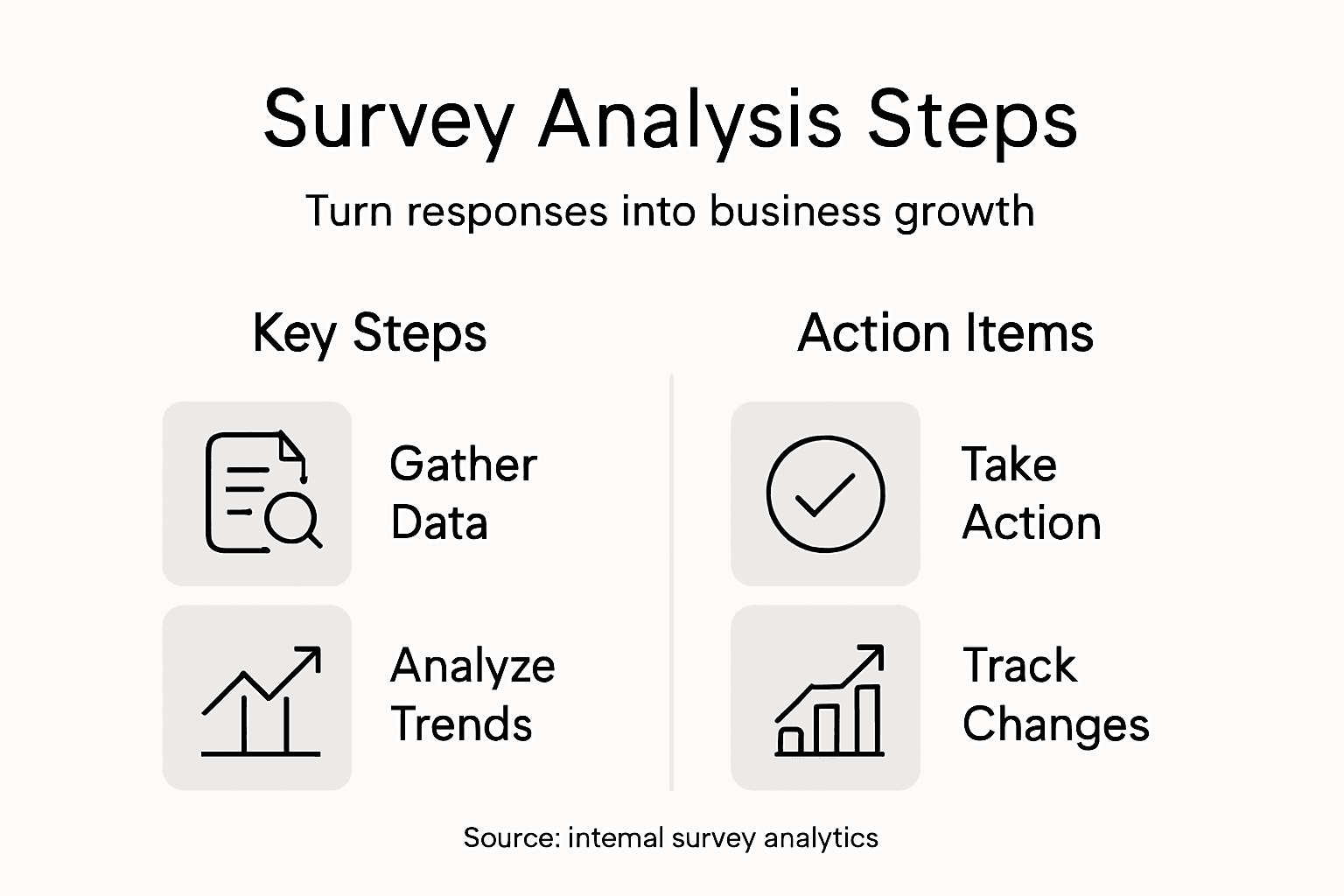
Pro tip: Develop a standardized reporting template that translates complex statistical findings into clear, actionable recommendations for different organizational stakeholders.
Common Pitfalls and U.S. Compliance Faults
Survey research challenges represent critical obstacles that can undermine the entire customer feedback process. Understanding these potential pitfalls is essential for businesses seeking to create meaningful, legally compliant survey instruments that generate reliable insights while protecting respondent rights.
Common survey design and compliance pitfalls include:
- Sampling Bias: Selecting non-representative participant groups
- Unclear Objectives: Failing to define precise research goals
- Inadequate Privacy Protections: Insufficient data security measures
- Leading Question Formulation: Creating questions that suggest specific responses
- Non-Consensual Data Collection: Neglecting explicit participant consent
Critical compliance considerations for U.S. businesses encompass several key legal and ethical dimensions:
- Ensure comprehensive informed consent documentation
- Implement robust data privacy protocols
- Maintain transparent participant communication
- Protect personally identifiable information
- Comply with federal and state survey regulations
Legal compliance requires more than simply avoiding direct violations. Businesses must proactively design survey instruments that respect participant autonomy, protect sensitive information, and adhere to evolving regulatory standards. This means understanding nuanced requirements from agencies like the Federal Trade Commission and potential state-level consumer protection laws.
Technology and regulatory complexity make survey compliance increasingly challenging. Modern organizations must integrate legal expertise with research design, creating survey instruments that are not just statistically valid, but also legally defensible and ethically sound.
Consider these key risks and corresponding solutions for U.S. survey compliance:
| Pitfall | Potential Impact | Mitigation Strategy |
|---|---|---|
| Sampling bias | Unreliable results | Use random sampling methods |
| Data privacy gaps | Legal penalties | Enforce strict data protocols |
| Vague objectives | Irrelevant findings | Set clear research questions |
| Consent failures | Trust erosion | Obtain written participant consent |
Pro tip: Consult with legal counsel specializing in data privacy to review survey instruments and ensure full compliance with current U.S. regulatory standards.
Drive Growth by Turning Customer Satisfaction Insights into Action
Understanding the complexity behind customer satisfaction surveys is crucial for any business striving to enhance customer loyalty and long-term profitability. This article highlights key challenges such as designing unbiased questions, managing survey compliance in the United States, and analyzing detailed metrics like Customer Satisfaction Score (CSAT) and Net Promoter Score (NPS). If you are aiming to transform these nuanced insights into measurable business growth, you need more than just data—you need a comprehensive digital strategy.
Boost your customer engagement and conversion rates with expert solutions from our digital marketing agency. We specialize in building websites optimized for all devices and promoting your brand across social networks to increase visits and convert visitors into loyal customers. Don’t let valuable survey feedback go unused. Visit https://seo-analytic.com now and discover how our tailored strategies can help your business leverage customer satisfaction data for real, sustainable growth.
Frequently Asked Questions
What are customer satisfaction surveys?
Customer satisfaction surveys are tools used by businesses to understand and improve customer experiences. They gather insights on customer perceptions, expectations, and areas of improvement beyond simple feedback.
What types of customer satisfaction surveys are there?
There are several types of customer satisfaction surveys, including Customer Satisfaction Score (CSAT), Net Promoter Score (NPS), Customer Effort Score (CES), and Product Market Fit surveys. Each type serves distinct purposes in measuring specific aspects of customer experience.
How can I design an effective customer satisfaction survey?
To design an effective survey, define clear research objectives, use straightforward language, ensure relevance of each question, and mix question types for more comprehensive feedback. Pilot testing the survey can also help identify areas for improvement.
What are common pitfalls to avoid when creating customer satisfaction surveys?
Common pitfalls include sampling bias, unclear research objectives, leading questions, inadequate privacy protections, and failing to obtain consent from participants. Addressing these issues proactively helps ensure reliable and compliant survey results.
Recommended
- Sustainable Business Growth: Impactful Digital Strategies – seo analytic
- 7 Interactive Content Examples to Boost Business Growth – seo analytic
- 7 Evergreen Content Ideas for Business Owners in the USA – seo analytic
- Conversion Optimization Strategies to Boost Sales Fast – seo analytic
- Porque é que a Nutrição de Leads é a Chave para Vendas Sustentáveis – First Media onde o Marketing Digital Impera