
Building an email list remains one of the most powerful marketing tools for small businesses and startups, yet many struggle to grow their subscriber base effectively. Unlike social media followers who see content at the mercy of algorithms, email subscribers give you direct access to their inbox. This guide walks you through proven strategies to build, grow, and maintain an email list that converts browsers into buyers. You’ll discover practical tactics for attracting quality subscribers, avoiding common pitfalls, and automating your growth while maintaining the personal touch that keeps customers engaged and loyal.
Table of Contents
- Understanding The Prerequisites For Building Your Email List
- Step-By-Step Guide To Growing Your Email List Effectively
- Avoiding Common Mistakes And Optimizing Your Email List Building
- Measuring Success And Automating Your Email List Management
- Grow Your Business Faster With Seo Analytic
- Frequently Asked Questions
Key takeaways
| Point | Details |
|---|---|
| Strategic planning drives growth | Building an effective email list requires clear goals, proper tools, and consistent engagement strategies tailored to your audience |
| Lead magnets boost conversions | Offering valuable incentives like guides, discounts, or exclusive content significantly increases sign-up rates |
| Optimization improves results | Testing landing pages, personalizing content, and segmenting subscribers enhances open rates and reduces unsubscribes |
| Avoid critical mistakes | Neglecting segmentation, sending irrelevant content, and ignoring analytics lead to poor engagement and list decay |
| Automation scales efficiently | Marketing automation tools streamline list management while maintaining personalization that drives conversions |
Understanding the prerequisites for building your email list
Before you start collecting email addresses, you need the right foundation. Selecting an email marketing platform is your first critical decision. Popular options include Mailchimp, Constant Contact, and ConvertKit, each offering different features for list management, automation, and analytics. Choose a platform that scales with your business and integrates with your existing tools.
Legal compliance protects your business and builds trust. The CAN-SPAM Act requires you to include your physical address in emails, provide clear unsubscribe options, and honor opt-out requests within 10 days. Effective email marketing begins with choosing the right tools and understanding legal compliance such as CAN-SPAM and GDPR for US businesses. Even if you primarily serve US customers, GDPR may apply if you have European subscribers.
Setting clear goals guides your strategy. Are you building a list to nurture leads, announce new products, or share educational content? Your goal determines what lead magnets you create and how you segment subscribers. Write down specific targets like “grow list by 500 subscribers in 90 days” or “achieve 25% open rates within six months.”
Essential tools include a landing page builder, form creation software, and analytics tracking. Many email platforms bundle these features, but standalone tools like Unbounce or Leadpages offer advanced customization. You’ll also need a clear understanding of key terminology:
- Opt-in: When someone voluntarily subscribes to your list
- Double opt-in: Subscribers confirm their email address via a verification link, ensuring higher quality contacts
- Segmentation: Dividing your list into groups based on behavior, interests, or demographics
- Automation: Pre-scheduled email sequences triggered by specific actions
| Tool Type | Purpose | Popular Options |
|---|---|---|
| Email Platform | Send and manage campaigns | Mailchimp, ConvertKit, ActiveCampaign |
| Landing Page Builder | Create conversion-focused pages | Unbounce, Leadpages, Instapage |
| Analytics | Track performance metrics | Google Analytics, platform built-in tools |
| CRM Integration | Sync contacts and data | HubSpot, Salesforce, Zoho |
Pro Tip: Start with double opt-in to build a cleaner list from day one. While it may reduce initial sign-up numbers slightly, confirmed subscribers engage far more consistently and rarely mark your emails as spam.
Understanding email marketing best practices ensures you build on solid ground. Take time to set up your infrastructure correctly before pursuing aggressive growth.
Step-by-step guide to growing your email list effectively
Growing your list requires a systematic approach that attracts the right subscribers and keeps them engaged. Follow these proven steps to build momentum:
-
Create irresistible lead magnets that solve specific problems for your audience. A lead magnet is a valuable resource you offer in exchange for an email address. Effective examples include checklists, templates, ebooks, webinars, or discount codes. The key is relevance. A coffee shop might offer a “Guide to Brewing Perfect Coffee at Home” while a consulting firm could provide a “Free Business Assessment Template.”
-
Design high-converting landing pages dedicated to each lead magnet. Creating compelling lead magnets and optimized landing pages greatly increases email sign-up rates. Your landing page should have a clear headline, explain the benefit in 2-3 sentences, include a simple form (name and email only), and feature a prominent call-to-action button.
-
Place strategic call-to-action buttons throughout your website. Add opt-in forms to your homepage, blog sidebar, footer, and exit-intent popups. Test different placements to see what converts best. Make your CTA copy action-oriented like “Get Your Free Guide” instead of generic “Subscribe.”
-
Optimize every touchpoint for mobile devices. Over 60% of emails are opened on mobile, and most website visitors browse on smartphones. Your sign-up forms must be thumb-friendly with large buttons and minimal typing required.
-
Leverage social media channels to promote your lead magnets. Share valuable content on Facebook, Instagram, and LinkedIn with clear calls to action directing followers to your landing pages. Run targeted ads to expand reach beyond your current audience.
-
Implement offline tactics at events, in-store, or during consultations. Use QR codes on business cards, receipts, or signage that link directly to mobile-optimized sign-up forms. Train staff to mention email benefits during customer interactions.
-
Partner with complementary businesses for cross-promotion. Co-create a lead magnet with a non-competing business that serves your target audience. You both promote it to your respective audiences, expanding reach organically.
-
Add email sign-up opportunities to your checkout process. If you run an ecommerce store, include an opt-in checkbox during checkout. Offer order updates, exclusive deals, or early access to new products as incentives.
Pro Tip: Use practical lead generation ideas to create multiple entry points for subscribers. Not everyone will convert on their first visit, so give them several opportunities across different channels.
Consistent engagement keeps your list healthy. Send a welcome email immediately after sign-up introducing your brand and setting expectations for email frequency. Regular communication (weekly or bi-weekly) keeps you top of mind without overwhelming subscribers. Always deliver value first, whether through educational content, exclusive offers, or entertaining stories.

Explore effective landing pages and email marketing strategies to refine your approach continuously.
Avoiding common mistakes and optimizing your email list building
Even experienced marketers make mistakes that stunt list growth or damage subscriber relationships. Recognizing these pitfalls helps you build a stronger, more engaged audience.
Lack of segmentation is the most damaging mistake. Sending identical emails to your entire list ignores the reality that subscribers have different interests, purchase histories, and engagement levels. Failing to segment lists and ignoring subscriber preferences lead to lower engagement and higher unsubscribe rates. Start with basic segments like new subscribers, active customers, and inactive contacts, then refine based on behavior and preferences.
Poor content quality erodes trust quickly. Subscribers gave you inbox access expecting value, not constant sales pitches. Balance promotional emails with educational content, industry insights, and genuine help. If every email is a hard sell, people tune out or unsubscribe.
Infrequent communication makes subscribers forget who you are. When you finally send an email after months of silence, they mark it as spam because they don’t recognize your brand. Consistency matters more than frequency. Whether you email weekly or monthly, stick to a schedule so subscribers know what to expect.
Ignoring mobile optimization costs you conversions. Test every email and landing page on multiple devices before sending. Buttons should be easily tappable, text readable without zooming, and images load quickly even on slower connections.
Neglecting analytics means flying blind. Track these key mistakes and their solutions:
- Low open rates: Test different subject lines, send times, and sender names
- High unsubscribe rates: Review content relevance and email frequency
- Poor click-through rates: Improve email copy, CTA placement, and offer quality
- Spam complaints: Ensure proper opt-in processes and easy unsubscribe options
“The money is in the list, but the fortune is in the follow-up. A large list means nothing if you don’t nurture relationships through relevant, personalized communication that serves your subscribers first.”
Personalization extends beyond using someone’s first name. Segment based on purchase history, browsing behavior, geographic location, and engagement level. Send targeted content that speaks directly to each segment’s needs and interests. Someone who bought running shoes wants different content than someone who browsed hiking gear.
Consistent testing improves results over time. A/B test subject lines, email layouts, CTA button colors, send times, and content formats. Small improvements compound into significant gains. Test one element at a time so you know what actually moved the needle.
List hygiene maintains deliverability. Remove inactive subscribers who haven’t opened emails in six months. Send a re-engagement campaign first, but if they still don’t respond, let them go. A smaller, engaged list performs better than a large, unresponsive one.
Learn more about personalized marketing emails to boost engagement and build lasting customer relationships through targeted communication.
Measuring success and automating your email list management
Tracking the right metrics tells you what’s working and where to focus improvement efforts. Key performance indicators reveal your list’s health and growth trajectory.
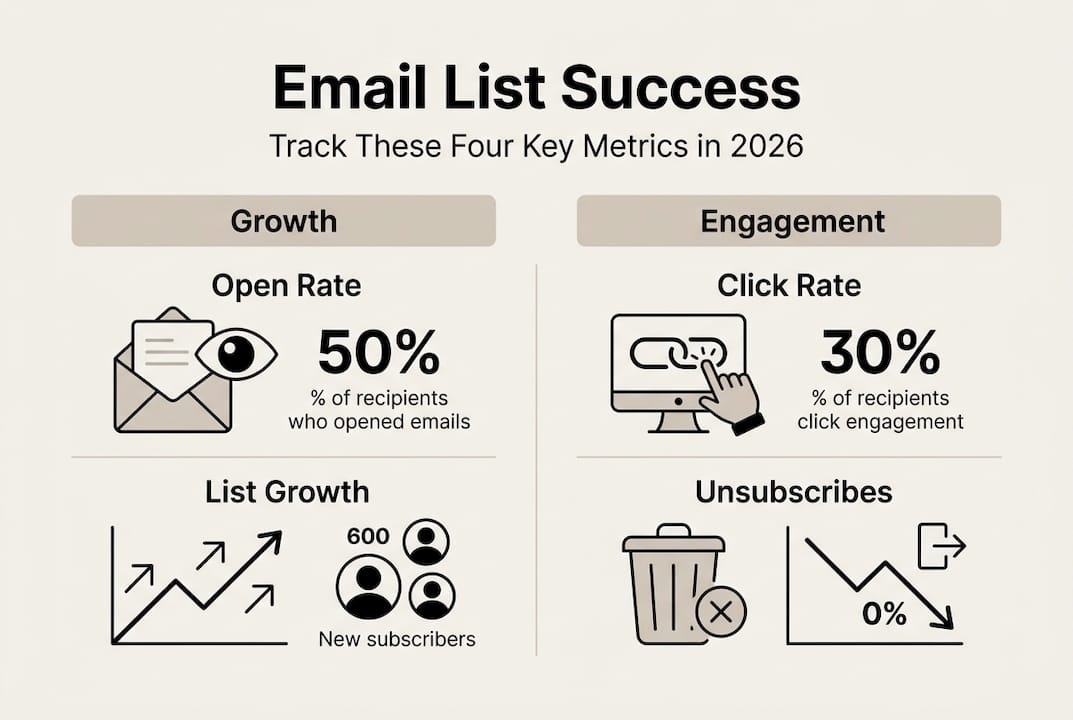
Open rates show how many recipients open your emails. Industry average hovers around 20-25%, but rates vary by sector. Low open rates signal problems with subject lines, sender reputation, or list quality. Test different subject line formulas, send times, and preview text to improve this metric.
Click-through rates measure engagement beyond opening. This percentage shows how many people clicked links within your email. Rates between 2-5% are typical, though highly engaged lists achieve higher numbers. Improve CTR by creating compelling calls to action, using buttons instead of text links, and ensuring your content delivers on the subject line’s promise.
List growth rate tracks how quickly you’re adding new subscribers minus unsubscribes and bounces. Calculate it monthly by subtracting lost subscribers from new ones, dividing by total subscribers, then multiplying by 100. A healthy growth rate is 2-3% monthly for most small businesses.
Unsubscribe rate indicates content relevance and frequency appropriateness. Rates below 0.5% per campaign are normal. Higher rates suggest you’re emailing too often, content isn’t resonating, or you’re attracting the wrong subscribers.
Automation streamlines list management, improves targeting, and boosts conversion rates by delivering timely, relevant messages without manual effort. Modern email platforms offer powerful automation features that work while you sleep.
Drip campaigns nurture leads through pre-written email sequences triggered by specific actions. A welcome series might include five emails over two weeks introducing your brand, sharing valuable resources, and eventually presenting an offer. Set it up once and it runs automatically for every new subscriber.
Triggered emails respond to subscriber behavior in real time. Examples include abandoned cart reminders, post-purchase follow-ups, birthday greetings, or re-engagement campaigns for inactive subscribers. These timely messages convert significantly better than generic broadcasts.
Comparing automation tools helps you choose the right platform:
| Platform | Best For | Key Features | Starting Price |
|---|---|---|---|
| Mailchimp | Beginners | Easy interface, templates, basic automation | Free up to 500 contacts |
| ConvertKit | Creators | Visual automation builder, tagging system | $15/month |
| ActiveCampaign | Advanced users | Complex automations, CRM integration, predictive sending | $29/month |
| Drip | Ecommerce | Shopping behavior triggers, revenue tracking | $39/month |
Balancing automation with personalization keeps your emails feeling human. Use merge tags to include subscriber names, reference past purchases, or acknowledge their location. Write conversational copy that sounds like it came from a person, not a robot. Review automated emails quarterly to ensure they still reflect your brand voice and current offerings.
Pro Tip: Set up a simple three-email welcome sequence as your first automation. Email one thanks them and delivers the promised lead magnet. Email two shares your best content or customer success story. Email three introduces your products or services with a special offer. This sequence builds trust and converts new subscribers into customers.
Regular review and adjustment keep your strategy effective. Schedule monthly analytics reviews to spot trends, identify underperforming campaigns, and celebrate wins. Annual strategy sessions help you set new goals and adapt to changing market conditions.
Explore our marketing automation guide and learn about drip email campaigns to implement sophisticated nurture sequences that convert leads into loyal customers.
Grow your business faster with seo analytic
Building an email list is just one piece of your digital marketing puzzle. At seo analytic, we provide comprehensive resources and services to help small business owners master website building, social media optimization, and conversion-focused marketing strategies. Our website building guide business owners walks you through creating a professional online presence that captures leads and converts visitors into customers.
Combine your email marketing efforts with strategic social media marketing to reach audiences across multiple channels. Our team specializes in creating integrated campaigns that drive traffic to your opt-in pages and nurture relationships through consistent, valuable communication. Whether you’re just starting out or looking to scale, our digital marketing basics guide provides the foundation you need to compete effectively in 2026 and beyond.
Frequently asked questions
How long does it take to see results from building an email list?
Results depend heavily on your marketing channels, budget, and consistency. Most businesses see measurable engagement within 60-90 days of implementing a focused list-building strategy. Organic growth through content marketing and social media takes longer than paid advertising but builds a more engaged audience. Expect to invest 3-6 months before your list generates significant revenue, though some businesses see conversions from their welcome sequence immediately. The key is consistent effort and continuous optimization based on your analytics.
What are the best incentives to get people to sign up for my email list?
The most effective incentives solve immediate problems your audience faces. Discount codes work well for ecommerce businesses, converting 15-25% of visitors who see the offer. Educational content like ebooks, templates, or video tutorials attracts subscribers interested in learning, creating a more engaged list long term. Exclusive access to sales, new products, or members-only content appeals to customers who want insider benefits. Test different incentives with your audience to discover what resonates best, and ensure the perceived value clearly outweighs the cost of sharing an email address.
How do I keep my email list engaged over time?
Consistent, relevant communication keeps subscribers interested and reduces list decay. Send valuable content on a predictable schedule so subscribers anticipate your emails rather than forgetting about you. Use segmentation to tailor messages to different audience groups based on their interests, purchase history, or engagement level. Incorporate interactive elements like surveys, polls, or contests to encourage participation. Share exclusive offers, early product access, or insider information that rewards their subscription. Learn more about personalized marketing emails to create messages that speak directly to individual subscriber needs and preferences.
Is it better to buy email lists or grow organically?
Never buy email lists. Purchased lists contain contacts who never opted in to hear from you, resulting in extremely low engagement, high spam complaints, and potential legal violations under CAN-SPAM regulations. Email platforms often suspend accounts that upload purchased lists, and internet service providers may blacklist your domain, damaging your sender reputation permanently. Organic growth takes more time but builds a list of genuinely interested subscribers who trust your brand and engage with your content. Focus your resources on creating compelling lead magnets and optimizing your opt-in process rather than taking shortcuts that damage your business long term.
Recommended
- Email Marketing Best Practices for Business Owners – seo analytic
- Writing effective emails: grow your business in 2026 – seo analytic
- Understanding Email Marketing Strategies for Your Business – seo analytic
- Personalized Marketing Emails: Boost Response Rates Fast – seo analytic
- Digital marketing checklist 2026: practical steps for small business success