

Small e-commerce stores in the USA often struggle to keep customer attention after checkout fades. That is where newsletters stand out, delivering curated content right to inboxes and creating a direct connection with your audience that social media cannot replicate. Owning your email list gives control over messaging and engagement, allowing you to build loyalty and habitual interactions. This guide demystifies newsletter functions and formats so you can turn regular emails into lasting relationships and repeat sales.
Table of Contents
- Defining Newsletters And Core Functions
- Popular Newsletter Formats And Goals
- Newsletter Platforms And Delivery Process
- Legal Compliance And CAN-SPAM Laws
- Maximizing Impact And Avoiding Common Mistakes
Key Takeaways
| Point | Details |
|---|---|
| Importance of Ownership | Newsletters allow businesses to own their relationship with subscribers, bypassing algorithms for direct communication. |
| Core Functions | Regular newsletters capture attention, build loyalty, generate audience data, and drive repeat sales. |
| Format Selection | Choosing the right newsletter format aligns with business goals and enhances subscriber engagement. |
| Compliance and Best Practices | Adhering to CAN-SPAM regulations and implementing best practices builds trust and improves deliverability. |
Defining Newsletters And Core Functions
A newsletter is simply curated content sent regularly to subscribers who want to receive it. Think of it as your direct communication channel, bypassing social media algorithms and landing straight in customer inboxes.
Unlike social posts that disappear in seconds, newsletters create a direct connection with your audience by delivering focused information on a schedule they expect.
Why Newsletters Matter for Your Store
Your email list gives you control. You own the relationship with every subscriber—no platform algorithm decides who sees your message.
Newsletters accomplish several core functions:
- Capture sustained attention through regular, relevant content in the inbox
- Build customer habit and loyalty by maintaining consistent contact
- Generate valuable audience data about what your customers care about
- Target specific segments with personalized offers and product recommendations
- Drive repeat sales by keeping your store top-of-mind between purchases
Most small e-commerce owners underestimate how powerful a simple weekly email becomes. Subscribers often request newsletters specifically because they value curated content delivered on a schedule—no noise, no scrolling, just what matters.
Here’s what separates newsletters from random promotions. Newsletters provide consistent value. You’re not just selling; you’re offering tips, stories, or insights your customers actually want.
This regularity builds something e-commerce businesses desperately need: customer retention. It costs five times more to acquire a new customer than keep an existing one. Newsletters keep existing customers engaged.
Your newsletter also provides a feedback loop. What topics get opened? Which products get clicked? This data shapes better inventory decisions and product launches.

Core Functions Explained
Newsletters serve dual purposes in your business:
- Information delivery – Share updates, product launches, or helpful content
- Audience engagement – Maintain regular touchpoints that strengthen customer relationships
That’s it. Simple. But the impact compounds over months and years as your list grows and loyalty deepens.
Pro tip: Start your newsletter with a clear value proposition. Tell subscribers exactly what they’ll receive each week—whether it’s style tips, exclusive discounts, or behind-the-scenes stories—so they know why opening your email matters.
Popular Newsletter Formats And Goals
Not all newsletters look the same. Your format choice determines what content you send and how subscribers perceive your brand. Different formats serve different business purposes.
Four Main Newsletter Formats
You have four primary options to match your business goals:
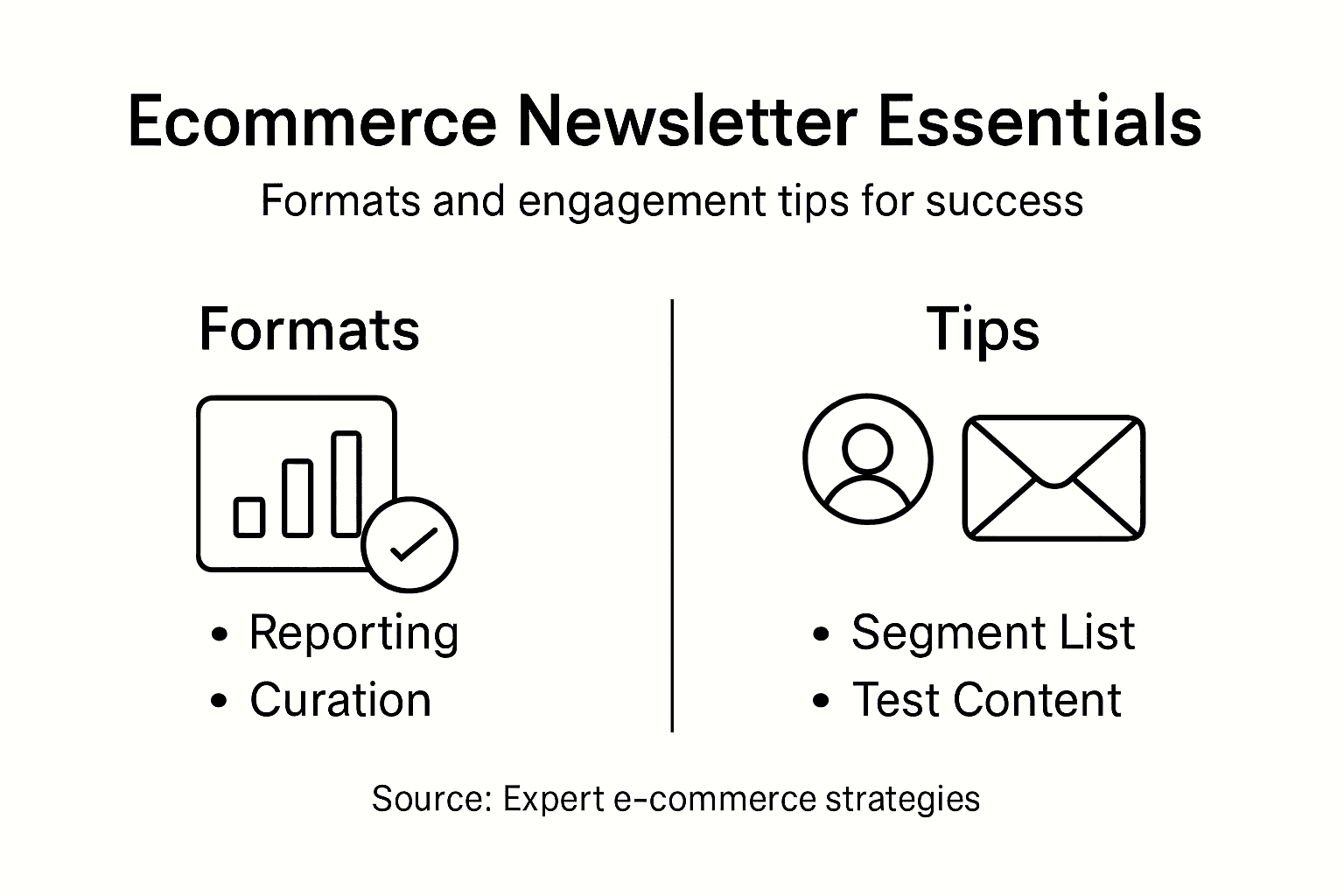
- Reporting newsletters deliver frequent updates with exclusive news and behind-the-scenes content your competitors don’t share
- Analysis newsletters provide deep dives into industry trends, expert opinions, and research your audience craves
- Curation newsletters round up third-party links and resources, positioning you as a helpful guide through the noise
- Artistic newsletters showcase personality, storytelling, or creative content that builds emotional connection
Each format appeals to distinct reader expectations about what value they’ll receive when they open your email.
Choosing the Right Format for Your Store
Reporting works best if you launch new products frequently or have insider stories to share. A fashion retailer might report on upcoming collections or seasonal shifts before public announcement.
Analysis appeals when you have expertise to showcase. Share why you chose certain suppliers, how your products solve real problems, or trends affecting your niche.
Curation fits perfectly for e-commerce owners who want to provide utility beyond selling. Roundup posts about styling tips, industry news, or customer-submitted photos build trust without pushing sales every time.
Artistic format works when your brand has a strong personality. A handmade jewelry maker might share the story behind each piece or take subscribers behind the scenes into the studio.
Here’s how the four main newsletter formats align with typical e-commerce goals:
| Format Type | Ideal Use Case | Typical Content | Audience Benefit |
|---|---|---|---|
| Reporting | Frequent product updates | Insider launches, announcements | Stay informed, exclusive news |
| Analysis | Establish industry expertise | Trend deep-dives, expert insights | Learn industry context |
| Curation | Build trust, add utility | External links, style roundups | Discover helpful resources |
| Artistic | Showcase brand creativity | Stories, studio visuals | Emotional connection, brand identity |
Aligning Format With Your Goals
Newsletters serve multiple strategic purposes. Understanding your primary goal shapes everything else.
Common goals include:
- Share knowledge – Educate subscribers about your products or industry
- Build and maintain networks – Strengthen relationships with your customer base
- Sustain engagement – Keep subscribers thinking about your brand between purchases
- Promote events or launches – Drive traffic to new products, sales, or special occasions
Newsletters help organizations reach these goals through consistent, targeted communication that audience analytics can measure and improve.
Most e-commerce owners find success by blending formats. Your primary format (say, curation) becomes the baseline, while occasional reporting announcements about new products slide in naturally.
Pick one format as your anchor, then layer in secondary formats sparingly. This prevents subscriber fatigue while keeping your newsletter fresh.
Pro tip: Test one format consistently for six weeks before switching. Track open rates and clicks to see which format resonates with your audience, then double down on what works.
Newsletter Platforms And Delivery Process
Your newsletter won’t send itself. You need a platform—software that manages your subscriber list, designs emails, and handles delivery. The right platform transforms a good idea into a reliable business tool.
What Newsletter Platforms Do
Newsletter platforms handle the behind-the-scenes work so you can focus on content. They manage your subscribers, automate sends, and provide data about performance.
Core features include:
- Subscriber management – Store contacts, segment lists, and track preferences
- Email design tools – Create professional templates without coding
- Automation – Schedule sends or trigger emails based on subscriber behavior
- Analytics – Track opens, clicks, and subscriber growth
- Integrations – Connect to your e-commerce store, CRM, or other tools
- Compliance tools – Handle unsubscribe requests and sender verification
Platforms like Ghost offer tools for newsletter publishing and audience segmentation, enabling creators to build subscription businesses with built-in monetization options.
Popular Platform Options for E-Commerce
Small business owners typically choose between several categories:
Email-focused platforms (Mailchimp, ConvertKit, Brevo) excel at list management and automation but lack tight store integration.
E-commerce-integrated platforms (Klaviyo, Omnisend) sync directly with Shopify or WooCommerce, making product recommendations and abandoned cart emails seamless.
All-in-one platforms (Ghost, Substack) combine newsletter software with website hosting, reducing tool sprawl.
Your choice depends on store size and technical comfort. A five-product store needs less power than a 500-product catalog.
Compare the main newsletter platform categories for small business needs:
| Platform Type | Integrates with E-Commerce | Best For | Key Limitation |
|---|---|---|---|
| Email-Focused | Limited or no | Simple automation, lists | Basic store connection |
| E-Commerce-Integrated | Full sync (Shopify, etc.) | Product-driven emails | May lack blog tools |
| All-in-One | Built-in | Newsletters + website | Can be overkill for simple needs |
The Delivery Process Explained
When you hit send, several things happen behind the scenes. Understanding this process helps you troubleshoot issues and understand deliverability.
The basic flow:
- You compose and schedule – Write content in the platform editor
- List preparation – Platform segments subscribers based on your targeting rules
- Email formatting – Platform converts your design into HTML code
- Authentication – Platform verifies you own the sending domain (prevents spoofing)
- Send – Emails transmit to subscribers’ inbox providers like Gmail or Outlook
- Tracking – Platform monitors opens, clicks, and bounces
Government and enterprise systems use standardized templates and sender identification to ensure consistent, compliant delivery at scale.
Most platforms batch sends to avoid overwhelming inbox servers. A 10,000-subscriber list might send over 10 to 30 minutes rather than instantly.
Your sender reputation matters. Inbox providers track bounce rates and spam complaints. Too many bounces damage future deliverability, even on a new list.
This is why list hygiene (removing invalid emails) prevents problems months down the line. Bad data today becomes undeliverable messages tomorrow.
Pro tip: Start with a platform offering free tiers (Mailchimp up to 500 contacts, Brevo unlimited free emails) to test before committing to paid plans.
Legal Compliance And CAN-SPAM Laws
Sending newsletters isn’t just about reaching inboxes. U.S. law regulates commercial email through the CAN-SPAM Act, enforced by the Federal Trade Commission. Ignoring these rules costs money and damages your business reputation.
What Is CAN-SPAM?
The CAN-SPAM Act applies to any commercial email you send. That includes promotional messages, product updates, and sales announcements.
Non-compliance carries real penalties. Violations can result in fines up to $43,792 per email sent. Class action lawsuits from customers add another layer of risk.
The good news? Compliance is straightforward. Most newsletter platforms enforce these rules automatically, but understanding them protects your business.
Core CAN-SPAM Requirements
Commercial emails must avoid false headers and deceptive subject lines while clearly identifying the message as an advertisement and including sender contact information.
Your emails must include:
- Accurate header information – “From,” “To,” and “Reply-To” fields match your domain
- Clear subject lines – No misleading subject text that hides the email’s commercial purpose
- Advertisement disclosure – Clearly state the email is a commercial message or advertisement
- Valid physical address – Include your business mailing address (not a P.O. box alone)
- Easy opt-out method – Provide a simple unsubscribe link subscribers can use immediately
You must honor unsubscribe requests within 10 business days. Automated unsubscribe links work best since manual processing creates liability.
Beyond The Basics
While CAN-SPAM sets the minimum standard, best practices go further. Compliance checklists emphasize transparency and consumer control across all commercial communications, including business-to-business emails.
Consider:
- Segment your list carefully – Send relevant content to subscribers who actually want it
- Honor preference centers – Let subscribers choose email frequency or topics
- Monitor bounce rates – Remove invalid emails promptly to protect sender reputation
- Keep authentication strong – Use SPF, DKIM, and DMARC protocols to verify your domain
These steps exceed legal requirements but build trust and improve deliverability.
Non-compliance is expensive. Even unintentional violations cost thousands in fines. Take 30 minutes to audit your process now.
Most newsletter platforms include built-in compliance features. Mailchimp, Klaviyo, and others automatically add unsubscribe links and manage list preferences.
Pro tip: Include a preference center link in your footer, allowing subscribers to adjust frequency or topics rather than unsubscribing entirely. This reduces churn while respecting subscriber preferences.
Maximizing Impact And Avoiding Common Mistakes
A newsletter that reaches inboxes but gets deleted matters little. Real impact means subscribers open, read, and act. This requires strategy and attention to detail.
Strategies For Maximum Engagement
Three tactics separate newsletters that work from those that don’t: subscriber acquisition, content quality, and continuous testing.
Growing your list starts with strategic placement. Add signup prompts on your homepage, checkout pages, and blog posts. Combining onsite sign-up invites with social media ads expands reach significantly and converts external traffic into subscribers.
Personalization amplifies engagement. Segment subscribers by purchase history, product interest, or geography. Send fashion recommendations to customers who buy clothing, not accessories. Personalized segments see open rates 20 to 50 percent higher than broadcast emails.
Testing reveals what works for your audience. A/B test subject lines, send times, and content formats. Track results in your platform analytics. What works for another store might flop for yours.
Common Mistakes That Kill Results
Most newsletter failures stem from predictable errors. Avoiding these saves months of lost revenue.
Mistakes to eliminate:
- Weak subject lines – “Weekly Update” gets ignored; “3 Styling Tricks for Fall” gets opened
- Typos and poor formatting – Errors erode trust faster than anything else
- Too many calls to action – Pick one primary action per email, not five links competing for attention
- Inconsistent branding – Different colors, fonts, or tone confuse subscribers about who you are
- Ignoring structure – Dense paragraphs don’t scan; use headers, bullet points, and white space
- Disrespecting time – Rambling emails get unsubscribed from; respect your subscribers’ inbox
Compelling subject lines, error-free content, and judicious calls to action directly improve open rates and reader trust.
Consistency matters most. A weekly newsletter every Tuesday at 10am builds habit. Sporadic emails confuse subscribers about when to expect your message.
Test relentlessly. One better subject line increases opens by 10 percent. Compound improvements over months yield dramatic growth.
Analyze your data religiously. Which emails drove clicks? What subject line language performed best? Use these insights to guide next month’s sends.
Pro tip: Create an email template that matches your brand, then reuse it for every send. Consistency builds recognition, and templates save hours monthly.
Elevate Your Newsletter Strategy to Boost Ecommerce Engagement
Struggling to keep your customers engaged with consistent, personalized newsletters that truly convert? The challenge many ecommerce owners face is transforming their subscriber lists into loyal customers through regular, relevant content and strong audience connections. Whether you aim to build trust with curated emails, share insider updates, or analyze customer preferences, mastering your newsletter format and compliance unlocks powerful retention and sales growth.
Take control of your digital presence today with expert help from our Digital Marketing Experts and Website Building team. We tailor strategies that optimize your website and email campaigns to increase visits and turn visitors into buyers. Visit https://seo-analytic.com now to discover reliable solutions that empower your ecommerce newsletter success. Start engaging your audience with purposeful content that delivers results and sustains growth.
Frequently Asked Questions
What are the benefits of using newsletters for e-commerce engagement?
Newsletters capture sustained attention, build customer loyalty, generate valuable data, target specific segments, and drive repeat sales by keeping your store top-of-mind between purchases.
How can I choose the right format for my newsletter?
Consider your business goals: use reporting formats for updates, analysis for expertise sharing, curation for providing useful resources, and artistic formats for storytelling and brand personality.
What should be included in a newsletter to ensure compliance with the CAN-SPAM Act?
A compliant newsletter must have accurate headers, a clear subject line identifying it as a commercial message, a valid physical address, a clear option to unsubscribe, and must honor unsubscribe requests within 10 days.
How can I improve engagement rates for my newsletters?
To improve engagement, focus on personalizing content for your audience, using compelling subject lines, maintaining consistent branding, avoiding errors, and testing different strategies like send times and layouts.